 United Kingdom
 France
 Italy
Italy
 Germany
 Sweden
 Spain
Spain
 Canada
 India
India


Request a Quote
Request a Quote
Milk
Milk
Custom Content One
Milk from cows, sheep, goats, and similar animals is consumed as a beverage and is the basis for all other dairy products. Plant based “milks” from coconuts, soy, oats, rice or nuts are marketed as alternatives.
Milk is produced at dairy farms and transported via truck to dairies where it is pasteurized and separated to produce lighter (skim) and heavier (cream) products, as well as ice cream, butter and other dairy specialties.
Milk products’ viscosities and densities depend upon their fat contents, but are generally low viscosity, around 1.5 cPs, with specific gravity comparable to water at 1.035, which leads to some processors handling it with high-speed centrifugal pumps. However cooled raw milk and cream exhibit non-Newtonian behavior, and pump agitation may cause coalescing of the fat globules, which increases viscosity and pump energy usage, as well as unwanted changes to the milk’s characteristics.
Plant-based “milks” are generally made up of finely milled plant material mixed with water and other ingredients to produce a milk-like taste and feel and have viscosities and densities similar to milk.
Both dairy and plant-based “milks” are susceptible to bacterial contamination and require use of hygienic pumps to enable regular system cleaning. Hygienic positive displacement pumps offer gentle, low-shear handling of milk products to minimize unwanted fat coalescence, so are often found in dairy processors. Pump flow rate is simple to control over the entire pump curve using variable speed drives to match flow to process equipment requirements. They may be easily cleaned in place or strip cleaned.
Custom Content One
Viking in the Process
Often PD pumps are required for downstream products, so processors standardize on them throughout the facility to simplify maintenance and minimize spares. Viking hygienic pumps are used to transfer raw milk from trucks to cooled storage, then to pasteurization, separation, homogenization and additional processing of dairy products such as butters, cheeses, condensed and evaporated milks, yogurts, ice creams, buttermilks and egg nogs.
Viking pumps are also used at plant-based “milk” processors to pump the ground plant materials to blending tanks and to pump from the blending tanks to pasteurization and packaging.
Custom Content Two
Applications
- Milk truck unloading
- Transfer to pasteurization, separation and further processing
Recommended Pumps
-
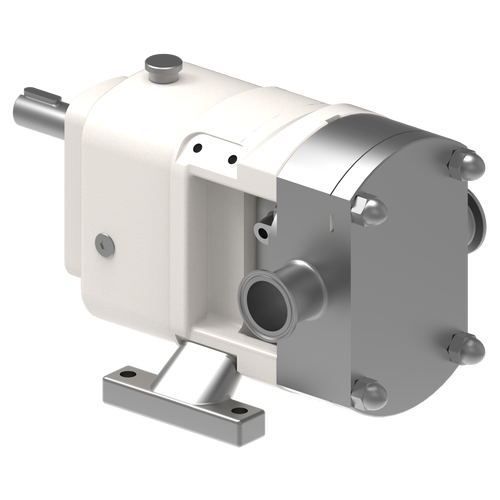
CLASSIC+ SERIES™
- Stainless Steel
- Mechanical Seal
- up to 832 gpm | up to 189 m3h
-
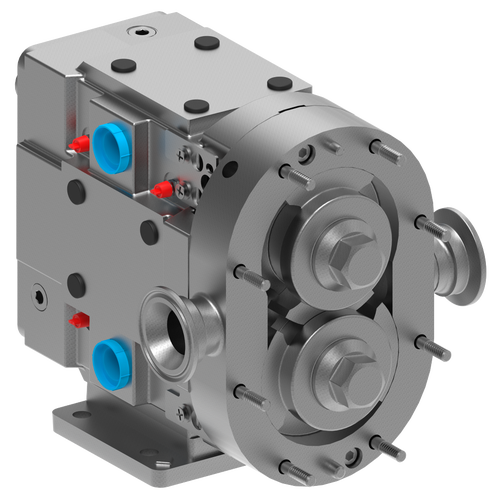
TRA®20 SERIES
- Stainless Steel
- Mechanical Seal
- up to 450 gpm | up to 102 m3h
-
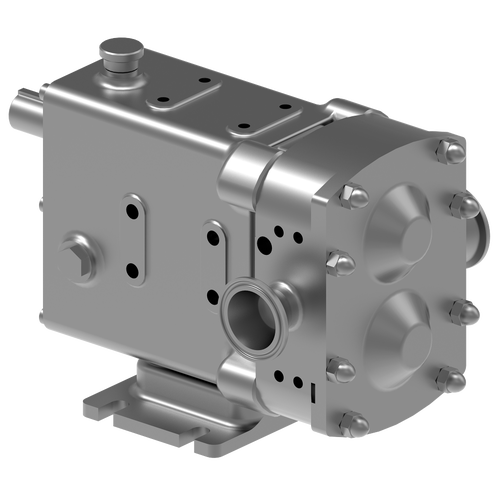
REVOLUTION® SERIES
- Stainless Steel
- Mechanical Seal
- up to 400 gpm | 1.8-91 m3h
Articles / Case Studies
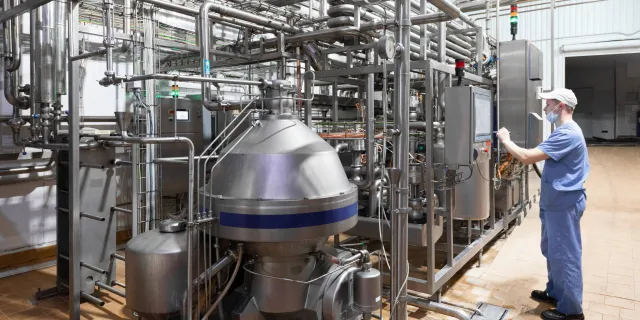
There are really four main types of suppliers of hygienic, or sanitary pumps for food and pharmaceutical applications. There is no best source for everyone – each has advantages and disadvantages depending on your situation and budget. Here are some points to consider when choosing where to source your pumps.

Viscosity is a measure of a liquid’s resistance to flow. And you don’t need to work in a laboratory to observe this. Anyone who’s spent any time in the kitchen has observed a variety of liquids with a wide variety of viscosities.
Videos

 Welcome to Viking Pump's Machine ShopThis is Viking Pump’s machine shop in Cedar Falls, Iowa. Continual investments in machines and people simplify and expedite production – enabling shipment for thousands of products every year.February 28, 2025
 Welcome to Viking Pump's FoundryThis is Viking Pump’s foundry in Cedar Falls, Iowa. For decades, the Viking Pump foundry has been a pillar of our vertical integration capabilities – allowing for the nimble production of castings and parts to satisfy customer needs and support new product development.February 14, 2025