 United Kingdom
 France
 Italy
Italy
 Germany
 Sweden
 Spain
Spain
 Canada
 India
India


Since the 1940s, Viking Pump's Universal product line has undergone four generations of engineering improvements – making upgrades to evolve with changing customer needs while preserving the features and reliability of the original design. The result has been a product line where customers running decades-old equipment can easily upgrade to the latest technology without redesigning their entire system. That backward compatibility has been the guiding principle of almost every design decision over the decades.
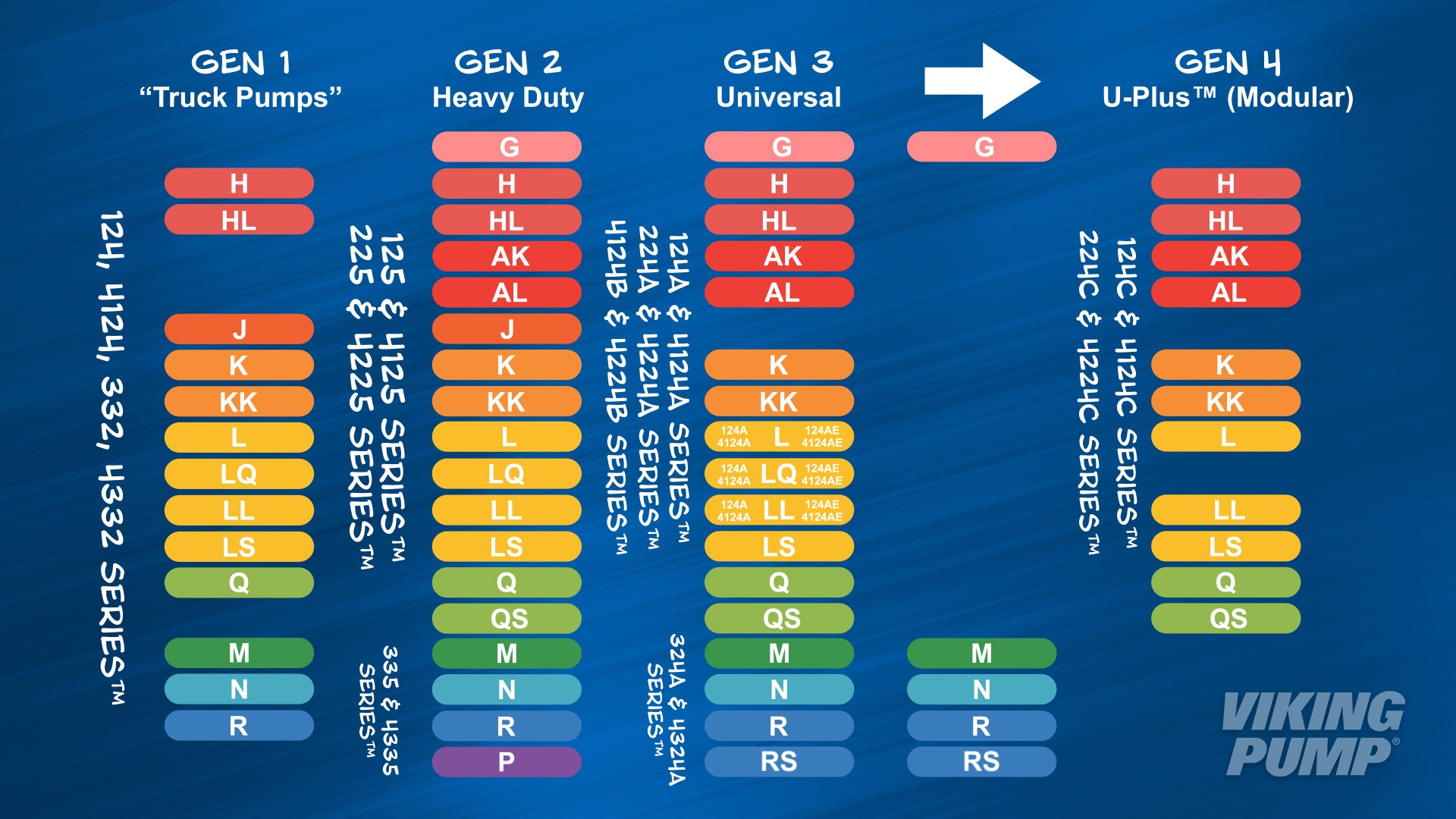
Let’s take a look at how these heavy duty internal gear pumps have evolved over the years. To help with tracking changes related to specific pump sizes, here is a reference image for the Universal Product Line over the years:
Built for the Road (1940s) Original drawing of truck pump
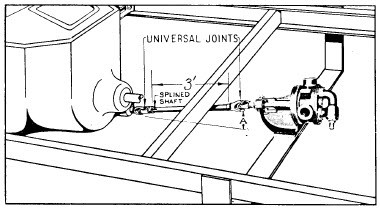
The Universal product line (before it was the Universal Product Line) started with the 124 & 4124 Series™ and was originally designed for truck-mounted applications where pumps were attached to the chassis and ran off the PTO. That demanding environment shaped features that would define the product line for decades: a footed mounting bracket for stable installation, a rotatable casing for flexible port orientation, and a thrust bearing in a threaded housing to accurately position the gear and simplify clearance setting.
What started as only a few truck pump models grew to 13 sizes. In similar sizes (same frame size), key components like packing, seals, gaskets, bearings, bracket & bushing, and relief valve were interchangeable, while the gears, idler bushing, idler pin, and heads would be unique to each displacement and not interchangeable.
A Simpler, More Robust Design (1970s) Bearing housing change
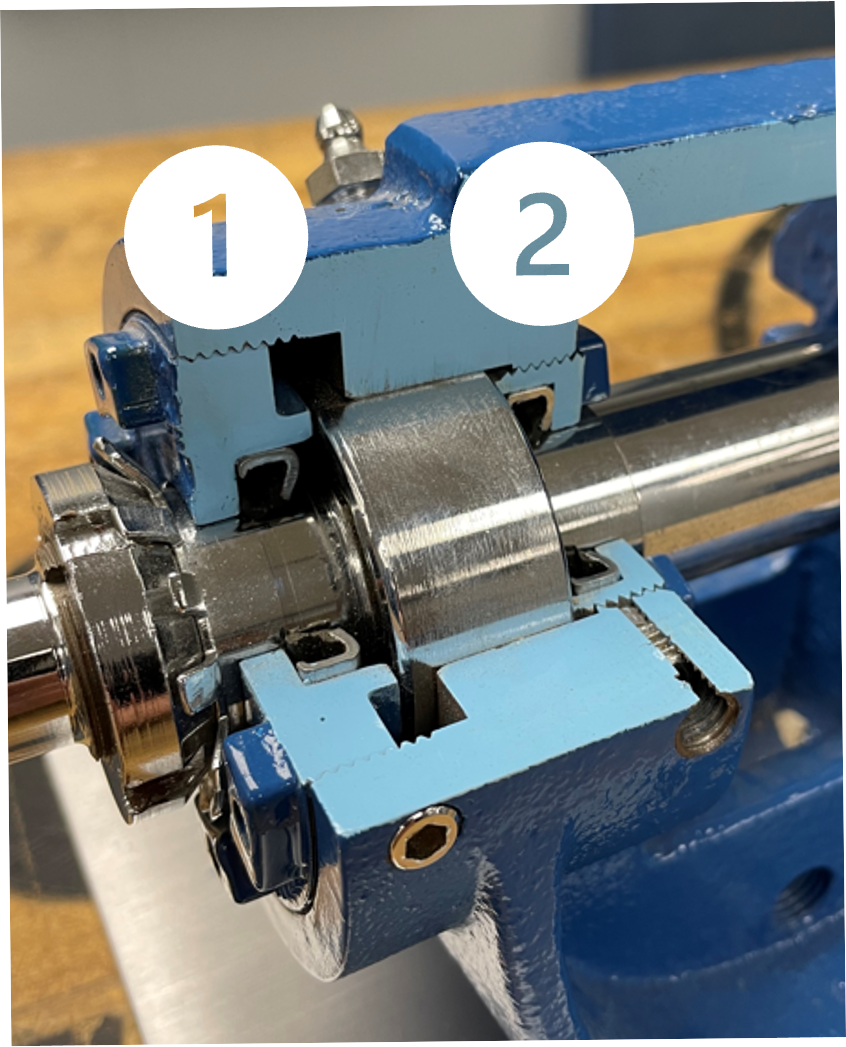
The second generation 125 & 4125 Series™ brought a significant structural change: eliminating the bearing housing in favor of a two-end-cap design. The bearing was now seated in the bracket between inner and outer end caps. The bearings inside remained the same meaning current inventory and replacement parts stayed consistent even as the pump architecture changed.
This generation also expanded the displacement range and introduced material-specific model numbers - 123 for steel, 127 for stainless steel - making pump model numbers more specific. Viking Pump began offering integrally jacketed versions featuring a jacketed bracket and often other jacketed externals for applications requiring the pump to be heated.
The Universal Redesign (1990s)
The third generation of pumps finally earned the "Universal" branding for good reason. These pumps were engineered to accept packing, component seals, and cartridge seals without bracket modifications - a direct response to increasing customer demand for cartridge seal options.
The bearing housing underwent another change and returned to a single-piece bearing housing, but was enlarged to allow seal replacement without disturbing the wetted end of the pump. Previous designs required pulling the rotor/shaft assembly and inserting seals from the side, a time-consuming process that also demanded special flatted gland seals. The new design eliminated that complexity. It should also be noted that the bearing inside the housing stayed the same, so bearings remained interchangeable between generations.
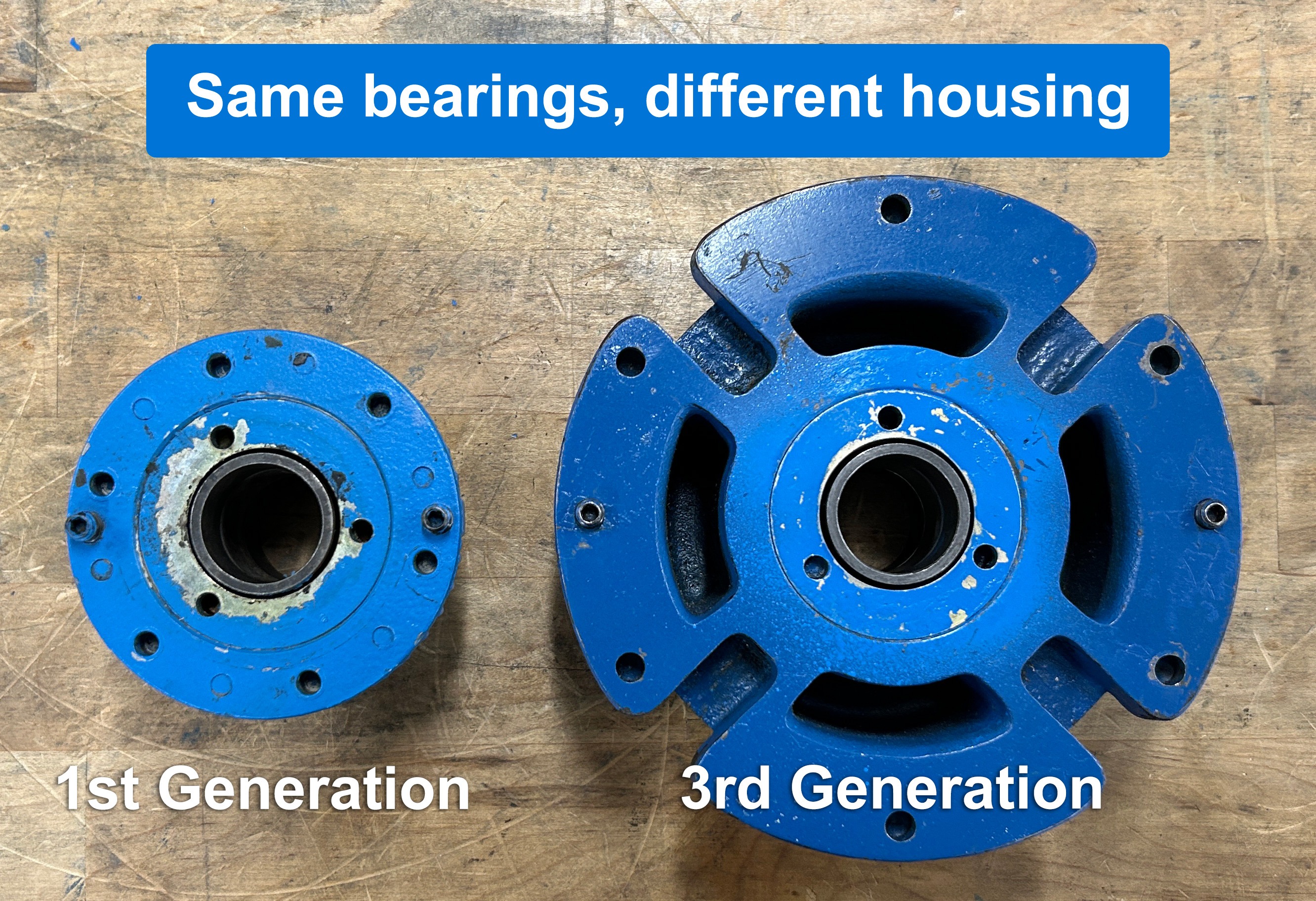
Several sizes received targeted upgrades based on field performance data. The Q, QS, and M sizes moved from double-row ball bearings to double tapered roller bearings for improved bearing life, the M size shaft was thickened behind the rotor for added strength, and the R size received a larger shaft throughout.
The L, LQ, and LL sizes presented a particular challenge. These pumps shared shaft diameters with smaller K and KK sizes - convenient for parts commonality, but undersized for the larger rotor and higher power demands. This led to two versions: the traditional 124A & 4124A Series™ and a new 124AE & 4124AE Series™ with a thicker shaft matching the LS size. The larger-shaft version delivered improved durability while remaining a dimensional drop-in for most installations.
Flexibility Without Compromise (Today)
The fourth and latest generation introduces two innovations that change how distributors and customers spec and maintain these pumps: the U-Plus™ bracket and ProPort™ casing.
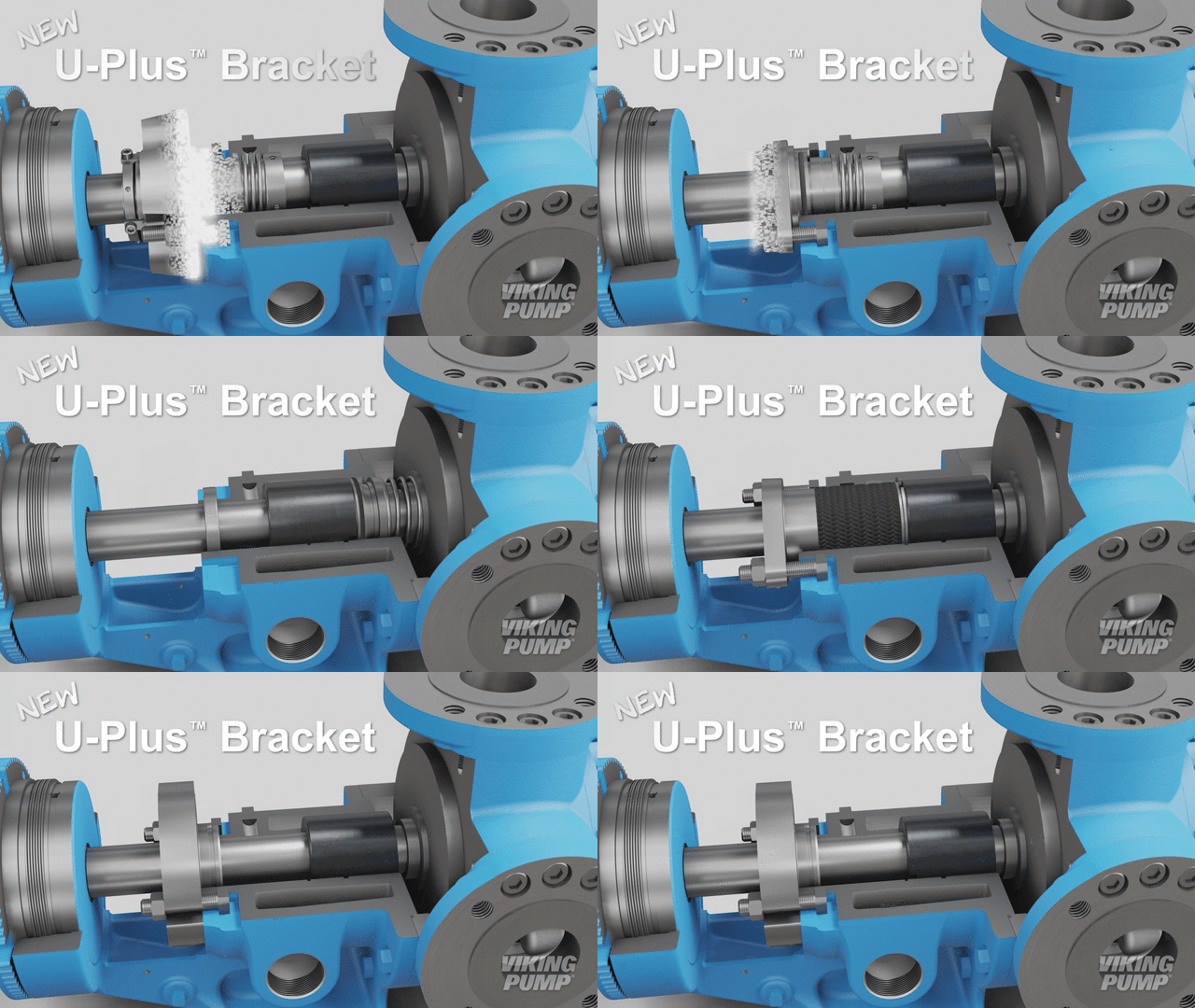
The U-Plus™ bracket features a through-bore design that accommodates both stuffing box seals and behind-the-rotor seals in the same bracket. Previous generations required different bracket configurations (A-suffix or B-suffix models) depending on seal type. The new “C” models eliminate that distinction, simplifying inventory for distributors and giving end users more flexibility when application requirements change.
This also addresses a long-standing quirk in the product line: the L and LQ designations referred to identical pumps differentiated only by port configuration. With the ProPort™ casing, that distinction becomes unnecessary. Going forward, this displacement is simply the "L" size regardless of port configuration - and existing LQ customers will specify L-size pumps with flanged ports.
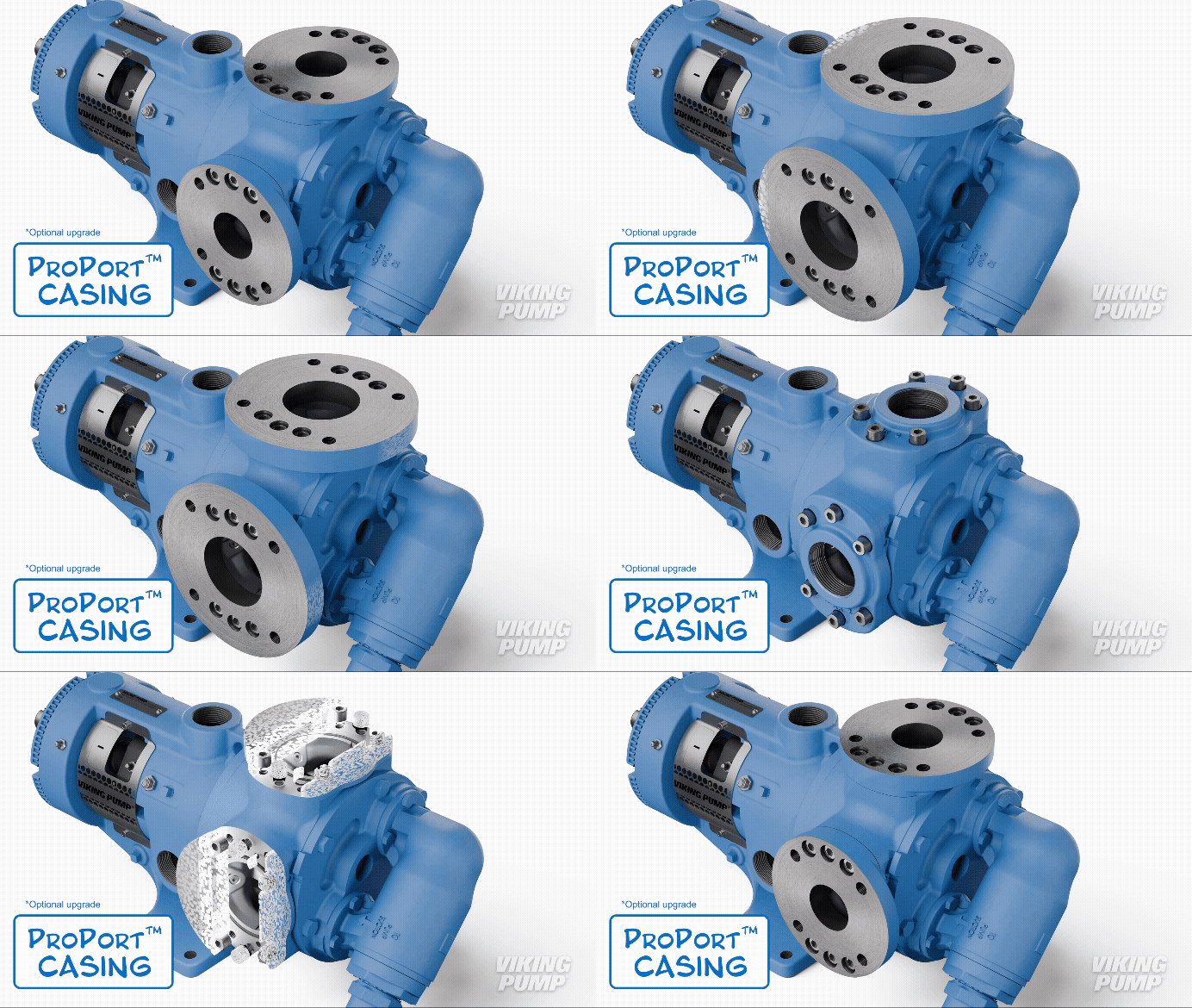
The fourth generation currently covers H through LL sizes. The G size and M-and-larger sizes continue with the proven third-generation design, giving customers access to the latest innovations where they deliver the most value while maintaining the reliability of established configurations where they're already performing well.
What This Means for Your Operation
If you're running second or third-generation Universal seal pumps, the engineering story here is practical: replacement parts remain available, and upgrade paths exist that don't require system redesigns. The fourth generation's U-Plus™ bracket and ProPort™ casing offer genuine operational advantages, simplified seal options, and adaptable port configurations for facilities ready to standardize on the latest design.
So it’s worth asking: What's currently installed in your facility, and what would the newest generation mean for your maintenance approach and operational flexibility? Your Viking Pump distributor can help map your existing equipment to current options and identify where upgrades may make sense for your process.
For over a century, Viking Pump has been the global leader in positive displacement pumping solutions, trusted by industries worldwide for their expertise, innovation, and reliability. With deep knowledge across a wide range of applications—from chemicals and coatings to food and fuel—Viking Pump delivers engineered solutions that keep processes flowing smoothly.