 United Kingdom
 France
 Italy
Italy
 Germany
 Sweden
 Spain
Spain
 Canada
 India
India


Request a Quote
Request a Quote
Protein Solution
Protein Solution
Custom Content One
Protein solutions are used for parenteral therapeutics such as monoclonal antibodies and vaccine components, made through biological processing techniques.
Proteins can be extracted from biological sources or produced through recombinant DNA using genetically engineered organisms. Protein solutions contain buffers, salts, proteins and water. Viscosity varies with protein concentration. Higher concentrations are desirable to enable delivery by subcutaneous injection rather than IV. Even if the final product isn’t high in concentration, proteins can be at high concentrations during manufacturing, such as in ion-exchange column chromatography. The higher the concentration the greater the viscosity and tendency for protein clumping. These solutions are extremely sensitive to shear forces and must be protected from contamination.
Hygienic positive displacement pumps are well suited to handle the range of viscosities, minimize shear, and prevent contamination. Their large cavities gently transport the solution to prevent damage to sensitive proteins. To protect against contamination, Viking hygienic pumps meet critical hygiene requirements, including Regulatory Compliance (3-A Sanitary Standards, USP Class VI materials, ATEX and CE certifications); Sanitary Design (surface finish requirements for cleanability, CIP/SIP system integration, material compatibility); and Documentation Support (material certifications and traceability, performance validation data, installation and maintenance documentation).
Custom Content One
Viking in the Process
Viking hygienic pumps are used to transfer the crude extract solution to purification, often centrifugation, precipitation or chromatography, and transfer final solution to storage or packaging.
Custom Content Two
Applications
- Crude extract transfer
- Protein solution transfer
Recommended Pumps
-
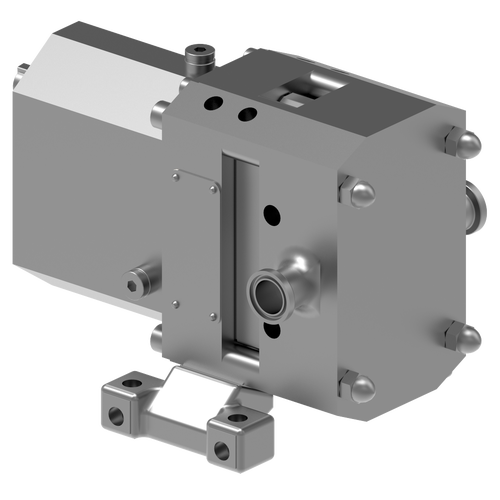
STERILOBE® SERIES
- Stainless Steel
- Mechanical Seal
- up to 753 gpm | up to 171 m3h
-
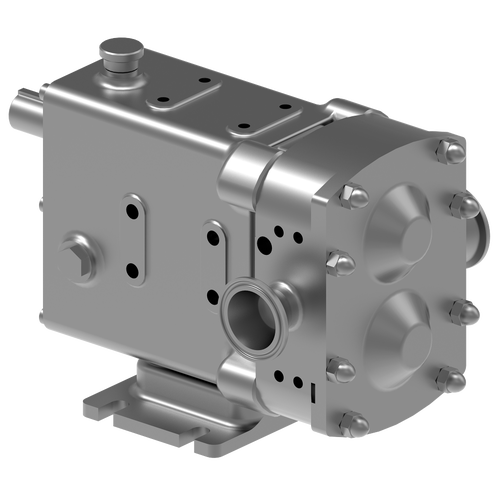
REVOLUTION® SERIES
- Stainless Steel
- Mechanical Seal
- up to 400 gpm | 1.8-91 m3h
Articles / Case Studies

Viscosity is a measure of a liquid’s resistance to flow. And you don’t need to work in a laboratory to observe this. Anyone who’s spent any time in the kitchen has observed a variety of liquids with a wide variety of viscosities.

Unlike most of my colleagues I didn’t start out with a mechanical background. While they were studying kinetics and machine design, I was studying digital electronics and industrial power. When I started my career in the world of pumps, I had to learn a whole new set of concepts. What was surprising was that while the terminology may be a bit different, the concepts are very similar. Think of the following as a “Rosetta Stone” for translating the common terms and concepts of fluid systems to your more familiar terms and concepts of electrical systems.
Videos

 Welcome to Viking Pump's Machine ShopThis is Viking Pump’s machine shop in Cedar Falls, Iowa. Continual investments in machines and people simplify and expedite production – enabling shipment for thousands of products every year.February 28, 2025
 Welcome to Viking Pump's FoundryThis is Viking Pump’s foundry in Cedar Falls, Iowa. For decades, the Viking Pump foundry has been a pillar of our vertical integration capabilities – allowing for the nimble production of castings and parts to satisfy customer needs and support new product development.February 14, 2025