 United Kingdom
 France
 Italy
Italy
 Germany
 Sweden
 Spain
Spain
 Canada
 India
India


Request a Quote
Request a Quote
Orange Juice
Orange Juice
Custom Content One
Orange, lemon, grapefruit, tangerine and other citrus juices are beverages and food ingredients produced by extracting liquid from the fruit. They may be concentrated and frozen to aid transport and storage, then rehydrated at the point of use.
Key pumping issues with citrus juices are the acidic nature (e.g. lemon juice pH 2 to 3, orange juice pH 3.5 to 4); the difficulty in shaft sealing due to sugars (64-66 brix); the need to gently handle the inclusion of fruit cells in juices where maintaining pulp is desired; the moderately high viscosity, which ranges from 15 cPs for clarified juice to 164 cPs for concentrate; and the need to clean pumps and systems regularly to maintain hygiene.
Hygienic positive displacement pumps handle all of these issues with ease. The alloy materials easily withstand the low pH; a variety of hygienic shaft seals and seal plans are available to minimize abrasive wear from sugars; relatively slow pump speed with large fluid cavities protect sensitive pulps; and they handle viscosities much higher than that of the concentrated juices. Hygiene compliance is assured through meeting hygienic standards like 3-A, ease of integration with CIP/SIP systems or strip-cleaning, and documentation support.
Custom Content One
Viking in the Process
Viking hygienic pumps are used in citrus juice processing beginning at juice extraction, pumping raw juice through filtration to evaporators for concentration or directly to pasteurization, then to packaging. Concentrated juice is pumped either to blending tanks for reconstitution, pasteurization and packaging or to heat exchangers for freezing and packaging.
Custom Content Two
Applications
- Raw juice and clarified juice transfer
- Concentrate transfer
- Additive metering (e.g. sweeteners)
Recommended Pumps
-
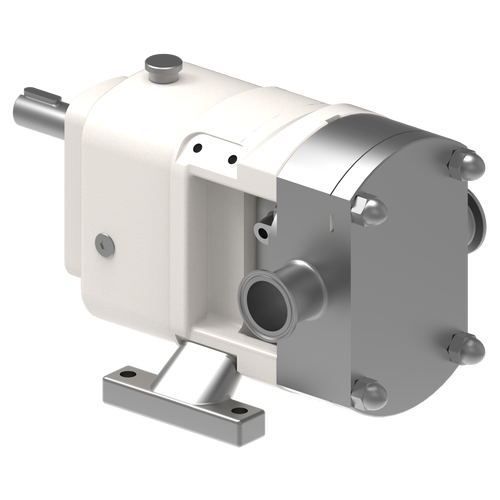
CLASSIC+ SERIES™
- Stainless Steel
- Mechanical Seal
- up to 832 gpm | up to 189 m3h
-
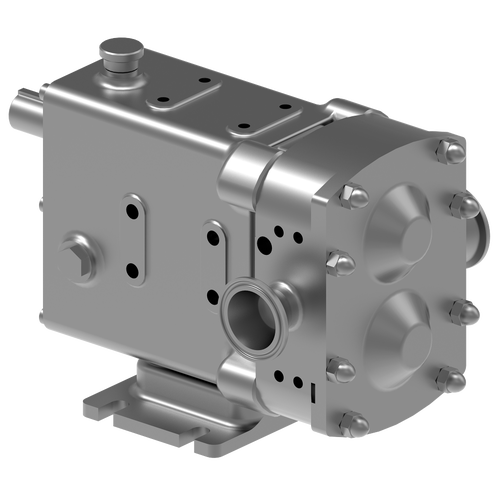
TRA®10 SERIES
- Stainless Steel
- Mechanical Seal
- up to 450 gpm | up to 102 m3h
-
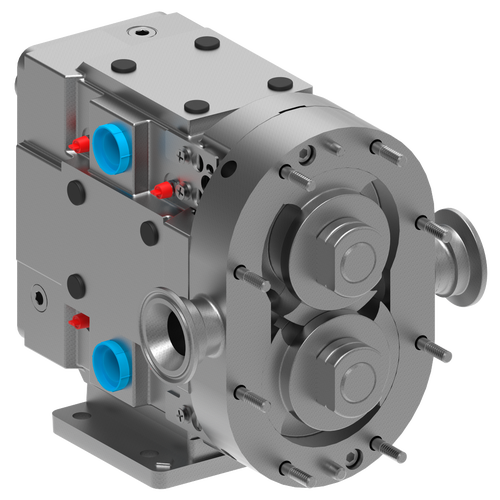
REVOLUTION® SERIES
- Stainless Steel
- Mechanical Seal
- up to 400 gpm | 1.8-91 m3h
Articles / Case Studies
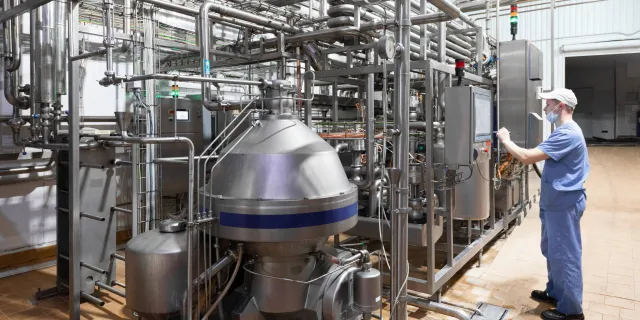
There are really four main types of suppliers of hygienic, or sanitary pumps for food and pharmaceutical applications. There is no best source for everyone – each has advantages and disadvantages depending on your situation and budget. Here are some points to consider when choosing where to source your pumps.

Viscosity is a measure of a liquid’s resistance to flow. And you don’t need to work in a laboratory to observe this. Anyone who’s spent any time in the kitchen has observed a variety of liquids with a wide variety of viscosities.
Videos

 50 States / 50 Pumping Applications: Connecticut, Florida, Illinois, Missouri, and WashingtonSince our founding in 1911, Viking Pump has built over 7,000,000 pumps and supplied them to customers all over the world. These pumps handle the broadest range of liquids in the industry. We’ve prepared a listing of 50 Viking pump applications, tying each to a state where this application can commonly be found. Today let’s explore Viking Pump applications in Connecticut, Florida, Illinois, Missouri, and Washington.February 28, 2025
 Welcome to Viking Pump's Machine ShopThis is Viking Pump’s machine shop in Cedar Falls, Iowa. Continual investments in machines and people simplify and expedite production – enabling shipment for thousands of products every year.February 28, 2025