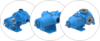
Viking Pump’s industrial gear pumps are the premiere positive displacement pump technology that covers nearly every pumping need.

With construction options that have been proven to work for light, medium, and heavy-duty applications, the versatility and popularity of positive displacement pumps lie in their relatively simple design, high efficiency, and consistent flow rates.

Wordmark
Image
VikingPumpIndustrial
Is sync taxonomy
Off
Category Icon
Industrial

Convert Pump from Stuffing Box Mechanical Seal to Behind the Rotor Seal - 4127C & 4227C Series™

In this video we will guide you through the conversion from a behind the rotor seal to a component mechanical stuffing box seal in Viking Pump’s stainless-steel pumps – with U-Plus™ bracket and ProPort™ casing. 

This video applies to these pump models:
H4127C, HL4127C, K4127C, KK4127C, L4127C, LL4127C, H4227C, HL4227C, K4227C, KK4227C, L4227C, LL4227C

Quick Tip: Change Port Sizes or Types with ProPort™ Casing

In this Quick Tip video, we will show you how to switch between flange sizes or port types on Viking Pump’s internal gear pumps with the ProPort™ casing.

First, loosen and remove the capscrews securing the existing flange.

Remove the flange.

Remove and discard the gasket or o-ring from the casing.

Repeat for the second flange.

Next, ensure the sealing glands near the casing ports are clean and free of debris.

Flanges or NPT ports can be installed using o-rings or gaskets, depending on process needs.

Latex

Latex is the generic term for emulsions of polymer in water that is stable. These emulsions can be natural or synthetically made. This liquid is typically very shear-sensitive and requires care when pumping. 

How do you connect a pump to a motor? Here are FOUR common drive types

In a previous Pump Report Chad discussed the motors used to power pumps. But how do you connect a pump to that motor? And what if you want to run the pump slower than motor speed? In this episode Chad talks about drives and their related equipment. 

The term “drive” is used to describe the ancillary equipment used to mount and power a pump. This includes the motor, which we’d already discussed, but can also include a baseplate, coupling, guard, reducer, and more.

Asphalt Cement

Positive displacement pumps are ideal for transferring asphalt cement because they provide a constant and steady flow, which is essential for handling the viscous nature of asphalt. These pumps operate by trapping a fixed amount of fluid and displacing it through the discharge pipe, making them highly effective at handling thick and sticky substances like asphalt cement. Unlike centrifugal pumps, which can lose efficiency and struggle with high-viscosity fluids, positive displacement pumps maintain consistent pressure and volume regardless of changes in pressure.