 United Kingdom
 France
 Italy
Italy
 Germany
 Sweden
 Spain
Spain
 Canada
 India
India


Request a Quote
Request a Quote
Sausage
Sausage
Custom Content One
A food product of ground meat, fillers and spices, often encased in a natural intestine or cellulosic or collagen skin to form a cylindrical casing, but also sold in bulk and as patties.
Sausage meat is commonly made from pork, beef, or poultry, but may come from fish or other animals. Most are cured with salts, smoked or fermented to increase shelf life and follow traditional recipes. The viscosity is very high but depends greatly on the degree to which the meat is ground or minced and the percentage of fats and other liquids which form the emulsion. Minimizing shear is important because it can affect the quality of the emulsion so. The pH varies with the type of sausage, but it rarely a concern for pumping, however salt can be corrosive to some materials. Use of low-shear, easily cleanable hygienic positive displacement pumps is critical to handle the viscosity, maintain hygiene and prevent contamination. Pumps that can be configured vertically with suction side hopper mount often preferred.
Custom Content One
Viking in the Process
Viking hygienic pumps are used to transfer ground meats from the grinding operations to the blending tank where salts, fillers and spices are added, then transferring the finished sausage meat to sausage casing filling machines or to other packaging. They are also used in the manufacture of cellulosic sausage casings, pumping the material from storage to spinnerettes.
Custom Content Two
Applications
- Ground or Minced sausage meat
- Cellulosic casing material
Recommended Pumps
-
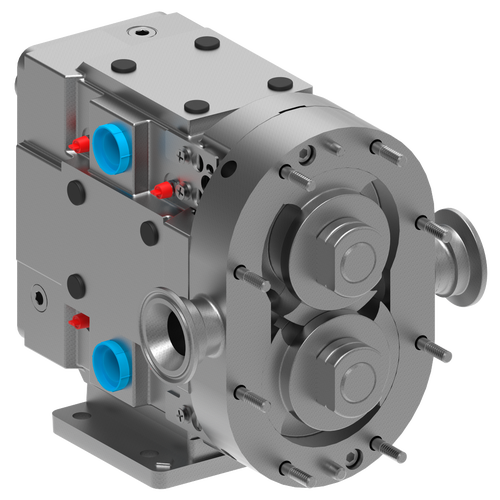
TRA®10 SERIES
- Stainless Steel
- Mechanical Seal
- up to 450 gpm | up to 102 m3h
-
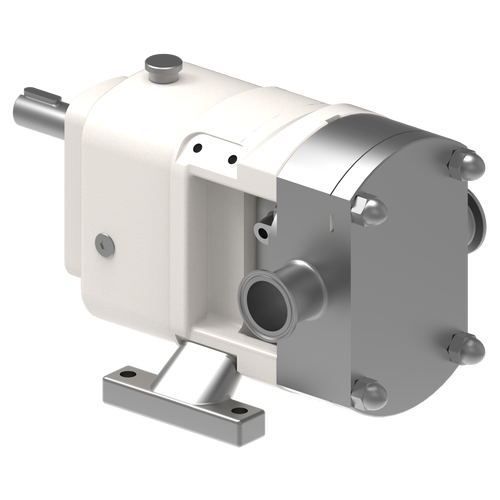
CLASSIC+ SERIES™
- Stainless Steel
- Mechanical Seal
- up to 832 gpm | up to 189 m3h
-
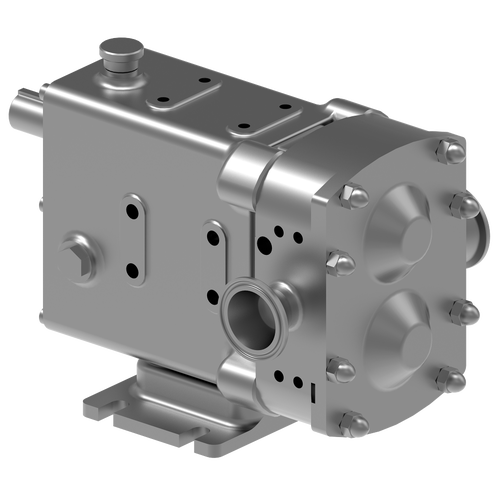
REVOLUTION® SERIES
- Stainless Steel
- Mechanical Seal
- up to 400 gpm | 1.8-91 m3h
Articles / Case Studies
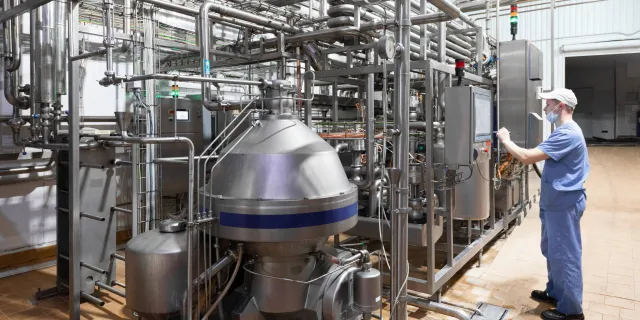
There are really four main types of suppliers of hygienic, or sanitary pumps for food and pharmaceutical applications. There is no best source for everyone – each has advantages and disadvantages depending on your situation and budget. Here are some points to consider when choosing where to source your pumps.

Viscosity is a measure of a liquid’s resistance to flow. And you don’t need to work in a laboratory to observe this. Anyone who’s spent any time in the kitchen has observed a variety of liquids with a wide variety of viscosities.
Videos

 Welcome to Viking Pump's Machine ShopThis is Viking Pump’s machine shop in Cedar Falls, Iowa. Continual investments in machines and people simplify and expedite production – enabling shipment for thousands of products every year.February 28, 2025
 Welcome to Viking Pump's FoundryThis is Viking Pump’s foundry in Cedar Falls, Iowa. For decades, the Viking Pump foundry has been a pillar of our vertical integration capabilities – allowing for the nimble production of castings and parts to satisfy customer needs and support new product development.February 14, 2025