 United Kingdom
 France
 Italy
Italy
 Germany
 Sweden
 Spain
Spain
 Canada
 India
India


Request a Quote
Request a Quote
Pectin
Pectin
Custom Content One
Pectin is a soluble gelatinous polysaccharide mostly derived from citrus peel and apple pomace, and is used as a gelling agent, stabilizer and fat substitute in food and beverage applications.
Pectin is primarily known for gelling jams, jellies and marmalades, but is used in many other food products including yogurts, ice creams, fruit-based drinks and baked goods. It is primarily sold and used as a dry powder due to ease of storage and shipping, but may be reconstituted as a gel prior to addition to other food products and cosmetics.
Pectin is produced by hydrolysis of citrus peel, apple pomace following juice removal, or from other plant residues, usually via acid extraction at elevated temperatures, followed by filtration, alcohol precipitation, washing, and drying. Several new proprietary processes to solubilize the pectin have been developed to eliminate acid waste and improve yields.
Positive displacement pumps are well suited to pectin production due to their ability to handle the fruit solids in acidic slurries with pH as low as 2.0, as well as to handle the viscous pectin solutions both during production and when reconstituted as an aqueous solution at food processors. In all cases pumps and systems must be cleanable to ensure hygiene. Flow rate is commonly controlled using variable speed drives, allowing the flow to be matched to that of the process.
Custom Content One
Viking in the Process
Viking hygienic positive displacement pumps are used at pectin processors to transfer the shredded fruit slurries from hydrolysis to separation processes, either filtration or centrifugation, to remove solid residues. They transfer the liquid fraction to precipitation where alcohol is added to recover pectin, and then they transfer the pectin solution to final filtration and drying processes.
They are also used to meter aqueous pectin solutions into batch or continuous processes at food plants.
Custom Content Two
Applications
- Fruit slurry
- Pectin transfer
- Pectin solution metering
Recommended Pumps
-
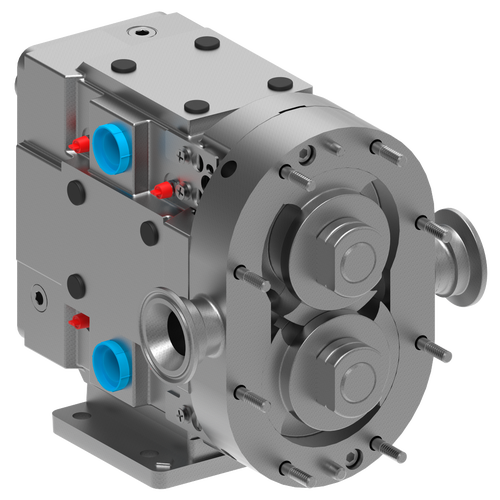
TRA®10 SERIES
- Stainless Steel
- Mechanical Seal
- up to 450 gpm | up to 102 m3h
-
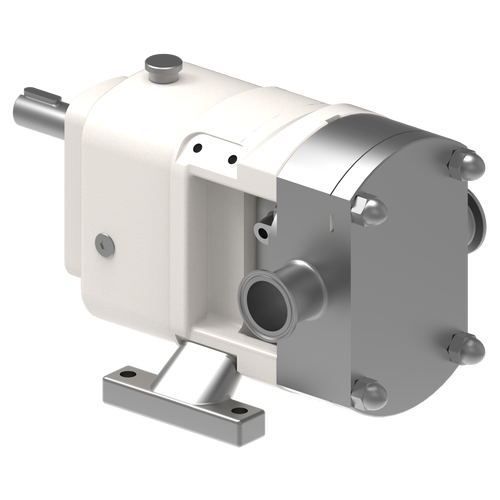
CLASSIC+ SERIES™
- Stainless Steel
- Mechanical Seal
- up to 832 gpm | up to 189 m3h
Articles / Case Studies
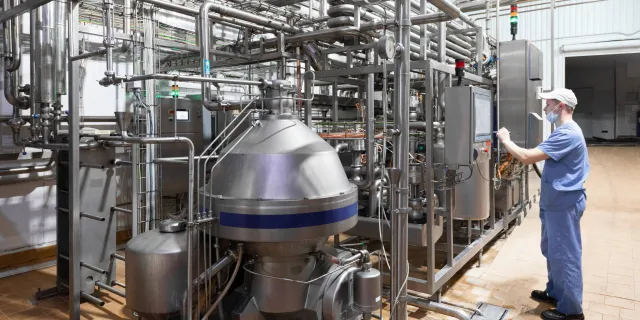
There are really four main types of suppliers of hygienic, or sanitary pumps for food and pharmaceutical applications. There is no best source for everyone – each has advantages and disadvantages depending on your situation and budget. Here are some points to consider when choosing where to source your pumps.

Viscosity is a measure of a liquid’s resistance to flow. And you don’t need to work in a laboratory to observe this. Anyone who’s spent any time in the kitchen has observed a variety of liquids with a wide variety of viscosities.
Videos

 Welcome to Viking Pump's Machine ShopThis is Viking Pump’s machine shop in Cedar Falls, Iowa. Continual investments in machines and people simplify and expedite production – enabling shipment for thousands of products every year.February 28, 2025
 Welcome to Viking Pump's FoundryThis is Viking Pump’s foundry in Cedar Falls, Iowa. For decades, the Viking Pump foundry has been a pillar of our vertical integration capabilities – allowing for the nimble production of castings and parts to satisfy customer needs and support new product development.February 14, 2025