 United Kingdom
 France
 Italy
Italy
 Germany
 Sweden
 Spain
Spain
 Canada
 India
India


Request a Quote
Request a Quote
Sulphate Soap
Sulphate Soap
Custom Content One
Sulphate Soap is a by-product in the production of pulp in the paper processing industry. It is used in production of Tall Oil (Pine Oil), which may be refined into various value-added products.
As wood chips are cooked to produce kraft pulp, their resins and fatty acids react with sodium hydroxide and sodium sulphide, forming soluble soaps in the spent cooking liquor, known as black liquor. These soaps float to the surface in skimming tanks and are skimmed off, pumped to storage, acidification and then to further processing. The soap is rheologically shear-thinning, and viscosities can vary greatly, from 500 to 25,000 cPs, depending on the feedstock, process and temperature. Temperatures range from 160°-195°F (70°-90°C), and the material is corrosive due to high alkalinity, with pH often exceeding 12. It can also be somewhat abrasive and may hold entrained gases from air flotation processes.
Positive displacement pumps are particularly well-suited for transferring sulphate soap due to their ability to handle high-viscosity fluids efficiently and maintain a consistent flow rate regardless of pressure variations. Sulphate soap presents challenges due to its viscous nature and other characteristics. Positive displacement pumps excel in such environments because they effectively trap a fixed volume of fluid and transport it through the pumping system, ensuring a steady and reliable flow. Additionally, these pumps offer excellent suction capabilities, allowing them to handle the challenging properties of sulphate soap without cavitation issues. This makes positive displacement pumps an ideal choice for processes requiring precision and reliability in the transfer of these materials.
Custom Content One
Viking in the Process
Viking pumps are commonly used to transfer soap from the skimmer tank to storage and then acidification or to railcar loading for off-site processing. When the crude soap is acidified into crude tall oil (CTO), Viking pumps then transfer that to the on-site refinery for separation processes, or to railcar loading for off-site processing.
Custom Content Two
Applications
- Soap transfer from skimmer tank to storage
- Transfer from storage to acidification
- Railcar loading for off-site processing
- Crude tall oil transfer to on-site refining
Recommended Pumps
-
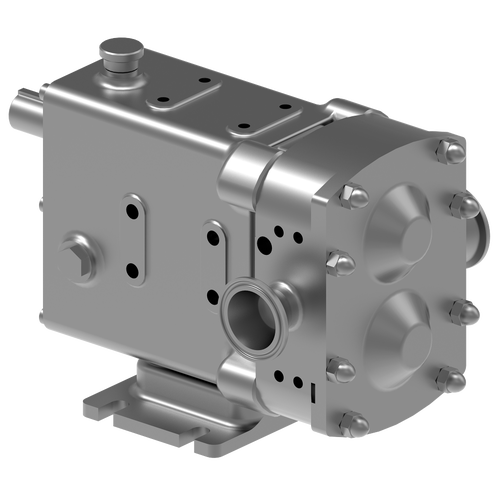
REVOLUTION® SERIES
- Stainless Steel
- Mechanical Seal
- up to 400 gpm | 1.8-91 m3h
-
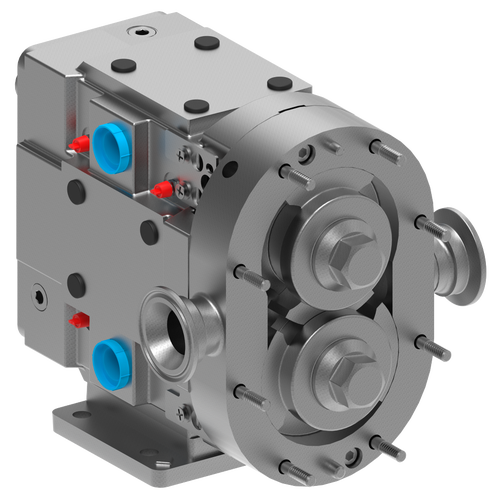
TRA®20 SERIES
- Stainless Steel
- Mechanical Seal
- up to 450 gpm | up to 102 m3h
Articles / Case Studies

Viscosity is a measure of a liquid’s resistance to flow. And you don’t need to work in a laboratory to observe this. Anyone who’s spent any time in the kitchen has observed a variety of liquids with a wide variety of viscosities.

Unlike most of my colleagues I didn’t start out with a mechanical background. While they were studying kinetics and machine design, I was studying digital electronics and industrial power. When I started my career in the world of pumps, I had to learn a whole new set of concepts. What was surprising was that while the terminology may be a bit different, the concepts are very similar. Think of the following as a “Rosetta Stone” for translating the common terms and concepts of fluid systems to your more familiar terms and concepts of electrical systems.
Videos

 Welcome to Viking Pump's Machine ShopThis is Viking Pump’s machine shop in Cedar Falls, Iowa. Continual investments in machines and people simplify and expedite production – enabling shipment for thousands of products every year.February 28, 2025
 Welcome to Viking Pump's FoundryThis is Viking Pump’s foundry in Cedar Falls, Iowa. For decades, the Viking Pump foundry has been a pillar of our vertical integration capabilities – allowing for the nimble production of castings and parts to satisfy customer needs and support new product development.February 14, 2025