 United Kingdom
 France
 Italy
Italy
 Germany
 Sweden
 Spain
Spain
 Canada
 India
India


Request a Quote
Request a Quote
Sugar Magma
Sugar Magma
Custom Content One
In the sugar manufacturing process, magma is a slurry of sugar crystals and liquid syrup or juice blended in a mingler, and pumped as a seeding material to subsequent boiling stages.
Depending the grade of magma, the percentage of crystals ranges from 30% to 45%, so this mixture has a high viscosity and is very abrasive. The crystals within the magma are large, from 170 to 270 microns, and can be damaged by aggressive pumping action, so it needs to be handled with larger, slower running pumps. Because the temperatures range from 40ᵒ to 50ᵒC (104ᵒ to 122ᵒF), pumps are usually jacketed to maintain temperature.
Positive displacement pumps are critical to efficient, low shear magma transfer and their very low NPSHr helps ensure sufficient NPSHa even with magma’s high density. Hardened bushings are required due to abrasiveness.
Custom Content One
Viking in the Process
Viking pumps are used to transfer magmas from the mingler or low melter to storage, then to either the intermediate pan or hi-melter. They are commonly replacing the scraper/ellipse pumps that were previously used due to those pumps’ high maintenance costs due to multiple large, expensive seals, high pulsation and inability to pull a suction lift.
Custom Content Two
Applications
- Applications
- Magma Transfer
Recommended Pumps
-
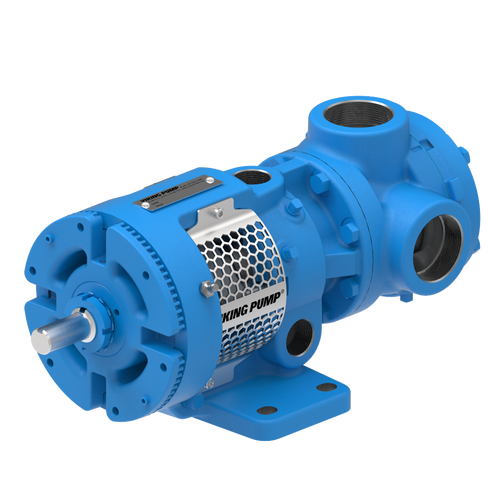
1224C SERIES™
- Cast Iron
- O-Pro® Seal
- 8-400 gpm | 1.8-91 m3h
-
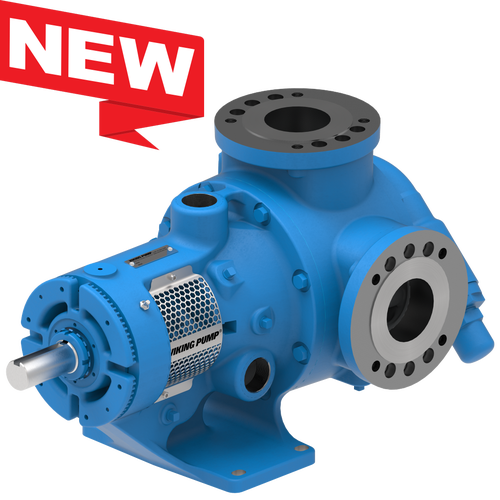
227C Series™
- Stainless Steel
- Packing
- up to 320 gpm | up to 73 m3h
-
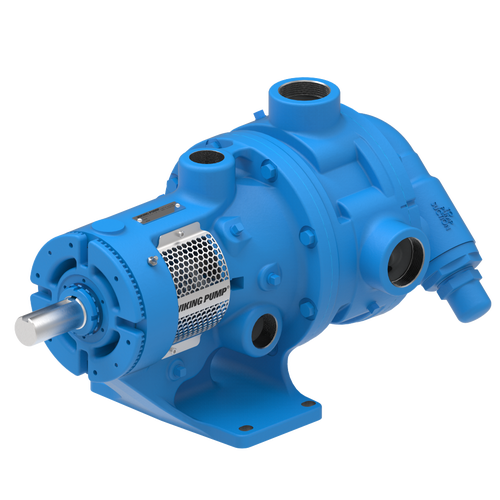
4224C SERIES™
- Cast Iron
- Mechanical Seal
- 15-500 gpm | 3.5-114 m3h
Articles / Case Studies
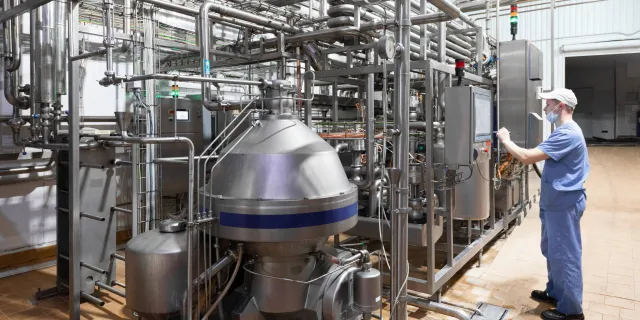
There are really four main types of suppliers of hygienic, or sanitary pumps for food and pharmaceutical applications. There is no best source for everyone – each has advantages and disadvantages depending on your situation and budget. Here are some points to consider when choosing where to source your pumps.
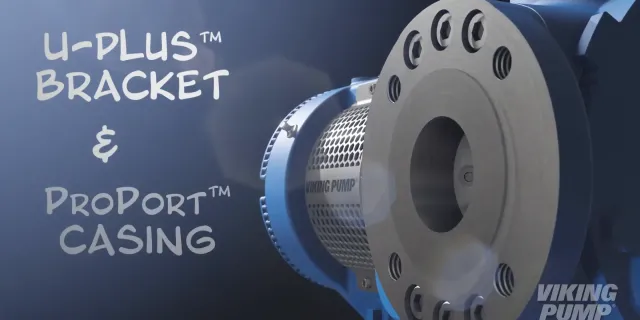
At Viking Pump, innovation is at the forefront of what we do. With the introduction of the U-Plus™ Bracket and ProPort™ Casing, we are redefining the capabilities of our internal gear pumps. These advancements are not just about new technology; they are about providing flexibility and efficiency in your pumping process. Let’s dive into what makes these innovations stand out.
Videos

 How Pump Packing Works - AnimationIn this video, learn about pump packing and how it works.March 14, 2025
 50 States / 50 Pumping Applications: Nebraska, Arizona, Virginia, Louisiana, MichiganSince our founding in 1911, Viking Pump has built over 7,000,000 pumps and supplied them to customers all over the world. These pumps handle the broadest range of liquids in the industry. We’ve prepared a listing of 50 Viking pump applications, tying each to a state where this application can commonly be found. Today let’s explore Viking Pump applications in Nebraska, Arizona, Virginia, Louisiana, and Michigan.March 14, 2025