 United Kingdom
 France
 Italy
Italy
 Germany
 Sweden
 Spain
Spain
 Canada
 India
India


Request a Quote
Request a Quote
Solvents
Solvents
Custom Content One
Solvents are materials that dissolve another substance, the solute, to form a solution. They are used in paints, paint thinners and removers, dry cleaning, product manufacturing and chemical processing.
Most solvents have very low viscosity, often <1 cPs, with a few exceptions like ethylene glycol and glycerol. Specific gravities are generally, but not always, <1, and many have low vapor pressures and low boiling points to allow rapid evaporation to leave the solute in place. Most organic solvents are flammable, and many are toxic and emit volatile organic compounds (VOCs).
The wide range of properties of various solvents plays a key role in determining the best pump for handling the application. Pump construction will ultimately be driven by the specific liquid being handled and the construction that offers the greatest chemical resistance, thermal shock resistance, leak prevention and is the most viscosity appropriate. Ductile iron or steel construction as well as explosion proof drives and grounding may be required for flammable solvents.
While one may intuitively think of a centrifugal pump for solvents due to low viscosity, rotary positive displacement pumps are frequently selected for a variety of reasons, including self-priming, low NPSHr, ease of flow control using variable speed drive, high pressure capability and a wide variety of sealing options including sealless mag drives.
Custom Content One
Viking in the Process
Viking pumps are used to transfer solvents from tank truck or railcar to bulk storage, then to meter solvents from storage to the process or to packaging. Process examples where Viking pumps are used to pump solvents include alkyd paint and printing ink manufacturing, adhesive and other chemical manufacturing, solvent extraction processes for edible oils and essential oils, and biodiesel processing. A special pump series is available for cold ethanol extraction.
Custom Content Two
Applications
- Solvent transfer and metering
Recommended Pumps
-
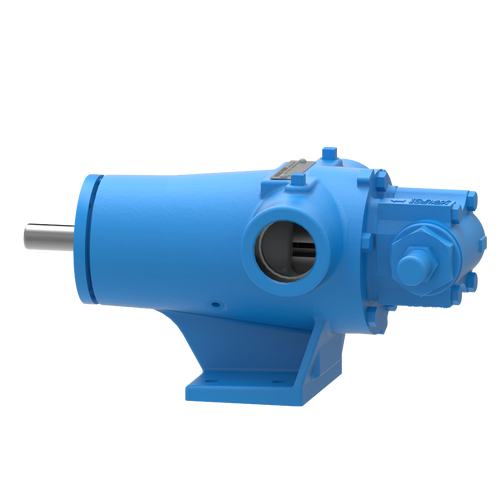
4195 SERIES™
- Cast Iron
- Mechanical Seal
- up to 580 gpm | up to 132 m3h
-
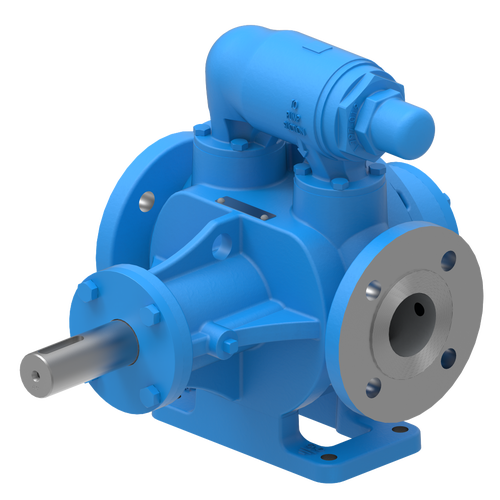
SG SERIES™
- Ductile Iron
- Mechanical Seal
- up to 190 gpm | up to 43 m3h
-
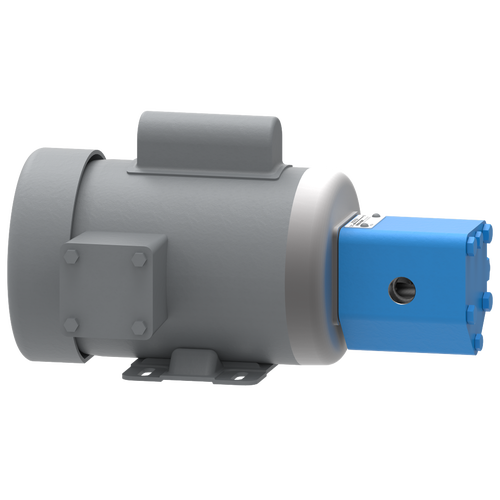
LVP SERIES™
- Stainless Steel
- Mechanical Seal
- up to 160 gpm | up to 36 m3h
Articles / Case Studies

Viscosity is a measure of a liquid’s resistance to flow. And you don’t need to work in a laboratory to observe this. Anyone who’s spent any time in the kitchen has observed a variety of liquids with a wide variety of viscosities.

Unlike most of my colleagues I didn’t start out with a mechanical background. While they were studying kinetics and machine design, I was studying digital electronics and industrial power. When I started my career in the world of pumps, I had to learn a whole new set of concepts. What was surprising was that while the terminology may be a bit different, the concepts are very similar. Think of the following as a “Rosetta Stone” for translating the common terms and concepts of fluid systems to your more familiar terms and concepts of electrical systems.
Videos

 How Pump Packing Works - AnimationIn this video, learn about pump packing and how it works.March 14, 2025
 Welcome to Viking Pump's Machine ShopThis is Viking Pump’s machine shop in Cedar Falls, Iowa. Continual investments in machines and people simplify and expedite production – enabling shipment for thousands of products every year.February 28, 2025