Wordmark
Image
VikingPumpIndustrial

How do you connect a pump to a motor? Here are FOUR common drive types

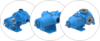
In a previous Pump Report Chad discussed the motors used to power pumps. But how do you connect a pump to that motor? And what if you want to run the pump slower than motor speed? In this episode Chad talks about drives and their related equipment. 

The term “drive” is used to describe the ancillary equipment used to mount and power a pump. This includes the motor, which we’d already discussed, but can also include a baseplate, coupling, guard, reducer, and more.

127C Series™

127C

The 127C Series™ internal gear stainless steel pump is the flexible, simple, and adaptable solution for a wide range of applications. This new generation of pumps comes standard with the U-Plus™ bracket sealed with packing, O-Pro® Guard Seal, as well as the ProPort™ casing that accommodates a variety of port sizes and types depending on your needs. It can handle flow rates up to 320 GPM (73 m³/h).

4227C Series™

4227C

The 4227C Series™ internal gear stainless steel pump is the flexible, simple, and adaptable solution for a wide range of applications. This new generation of pumps comes standard with internal jacketing, the U-Plus™ bracket for mechanical seals, as well as the ProPort™ casing that accommodates a variety of port sizes and types depending on your needs. It can handle flow rates up to 320 GPM (73 m³/h).

1227C Series™

1227C

The 1227C Series™ internal gear stainless steel pump is the flexible, simple, and adaptable solution for a wide range of applications. This new generation of pumps comes standard with internal jacketing, the patented O-Pro® Guard Seal for superior sealing capability, as well as the ProPort™ casing that accommodates a variety of port sizes and types depending on your needs. It can handle flow rates up to 320 GPM (73 m³/h).

227C Series™

227C

The 227C Series™ internal gear stainless steel pump is the flexible, simple, and adaptable solution for a wide range of applications. This new generation of pumps comes standard with internal jacketing, the U-Plus™ bracket sealed with packing, as well as the ProPort™ casing that accommodates a variety of port sizes and types depending on your needs. It can handle flow rates up to 320 GPM (73 m³/h).

4127C Series™

4127C

The 4127C Series™ internal gear stainless steel pump is the flexible, simple, and adaptable solution for a wide range of applications. This new generation of pumps comes standard with the U-Plus™ bracket for mechanical seals, as well as the ProPort™ casing that accommodates a variety of port sizes and types depending on your needs. It can handle flow rates up to 320 GPM (73 m³/h).

Asphalt Cement

Positive displacement pumps are ideal for transferring asphalt cement because they provide a constant and steady flow, which is essential for handling the viscous nature of asphalt. These pumps operate by trapping a fixed amount of fluid and displacing it through the discharge pipe, making them highly effective at handling thick and sticky substances like asphalt cement. Unlike centrifugal pumps, which can lose efficiency and struggle with high-viscosity fluids, positive displacement pumps maintain consistent pressure and volume regardless of changes in pressure.