 United Kingdom
 France
 Italy
 Germany
 Sweden
 Spain
 Canada
 India


Request a Quote
Request a Quote
Diesel (No. 2 Fuel Oil) Pump Solutions for Fuel Transfer
Diesel (No. 2 Fuel Oil) Pump Solutions for Fuel Transfer
Custom Content One
Why Positive Displacement Gear Pumps Work Best for Diesel Transfer
Positive displacement gear pumps are ideal for transferring No. 2 fuel oil due to their ability to handle viscous liquids with precision and efficiency. These pumps operate by trapping fluid between the gears and the casing, providing a consistent and predictable flow rate regardless of the changes in fluid pressure or viscosity. This makes them particularly well-suited for handling the thicker consistency of No. 2 fuel oil, ensuring smooth and reliable transfer without cavitation or loss of prime. Additionally, their robust design and construction allow them to withstand the demanding conditions often associated with fuel oil transfer, such as variable temperatures and pressures, while maintaining high levels of precision and efficiency. This reliability and adaptability make positive displacement gear pumps a preferred choice for industries that require continuous and dependable fuel oil transfer systems.
What Makes Diesel No. 2 Fuel Oil Challenging to Pump?
No. 2 fuel oil sits in a moderate viscosity range that can shift depending on temperature. When temperatures drop, the fluid thickens and puts more demand on the pump to maintain flow. When temperatures rise, viscosity drops and the pump needs to maintain accuracy without letting flow rates become erratic. Centrifugal pumps often struggle with these conditions because their performance is highly sensitive to changes in viscosity. Positive displacement gear pumps, by contrast, maintain a consistent output regardless of these variations, making them a much more reliable option for diesel fuel transfer across a range of operating conditions.
Fuel oil transfer also happens in environments where the pump needs to keep running with minimal supervision. Losing prime, air locking, or inconsistent flow are problems that create downtime and operational risk. Gear pumps address all three of these concerns through their self-priming capability and sealed, positive-action pumping mechanism. This design characteristic is one of the key reasons Viking Pump gear pumps are used widely in fuel oil transfer applications across industrial, energy, and utility sectors.
How Do You Select the Right Pump for Diesel Fuel Oil Applications?
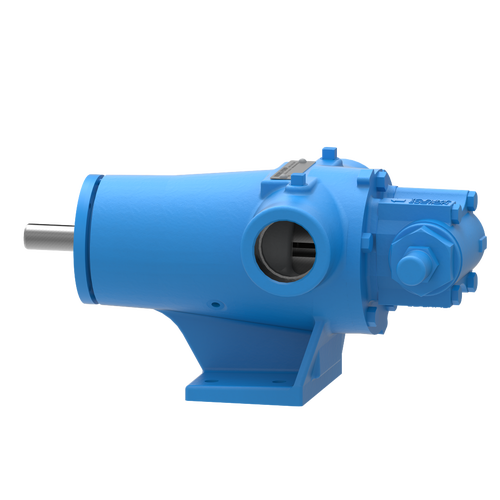
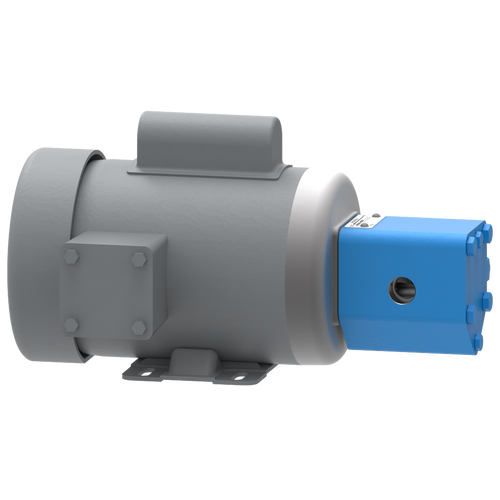
Selecting the right pump for diesel #2 fuel oil transfer comes down to three main factors: required flow rate, operating conditions, and material compatibility. Start with your flow rate requirement and match it to the pump series that covers your range, whether that is the compact 432-X Series for lower volumes or the 4195 Series for high-capacity systems. Next, consider the temperature range your system operates in and whether the pump materials, cast iron or ductile iron, are appropriate for those conditions. Finally, confirm that the seal type and construction are compatible with diesel fuel oil, which Viking Pump's recommended series are all designed to handle. Getting these three factors right from the start avoids costly replacements and keeps your system running at full efficiency.
Recommended Pumps
-
4195 SERIES™
- Cast Iron
- Mechanical Seal
- up to 580 gpm | up to 132 m3h
-
SG SERIES™
- Ductile Iron
- Mechanical Seal
- up to 190 gpm | up to 43 m3h
-
432-X SERIES™
- Cast Iron
- Mechanical Seal
- up to 20 gpm | up to 4.5 m3h

Articles / Case Studies

Discover how Asco Pompe and Viking Pump tackled extreme oil testing for an automotive leader—innovation and trust at its finest.

Viscosity is a measure of a liquid’s resistance to flow. And you don’t need to work in a laboratory to observe this. Anyone who’s spent any time in the kitchen has observed a variety of liquids with a wide variety of viscosities.
Videos

 How Pump Packing Works - AnimationIn this video, learn about pump packing and how it works.March 14, 2025
 50 States / 50 Pumping Applications: Connecticut, Florida, Illinois, Missouri, and WashingtonSince our founding in 1911, Viking Pump has built over 7,000,000 pumps and supplied them to customers all over the world. These pumps handle the broadest range of liquids in the industry. We’ve prepared a listing of 50 Viking pump applications, tying each to a state where this application can commonly be found. Today let’s explore Viking Pump applications in Connecticut, Florida, Illinois, Missouri, and Washington.February 28, 2025