 United Kingdom
 France
 Italy
Italy
 Germany
 Sweden
 Spain
Spain
 Canada
 India
India


Un tipo di pompa a ingranaggi in cui l’ingranaggio di trasmissione ha denti rivolti verso l’interno, chiamato rotore. Questo rotore fa ruotare un ingranaggio condotto sfalsato con un numero inferiore di denti rivolti verso l’esterno. Un elemento a forma di mezzaluna, che sporge dalla testa della pompa, crea questo sfalsamento e sigilla le cavità di pompaggio formate tra i denti degli ingranaggi. Clicca qui per guardare il nostro video esplicativo su questo argomento
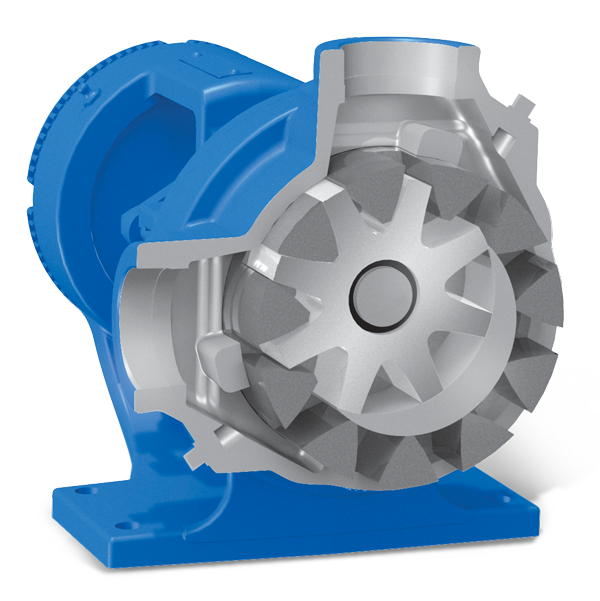
Pompa a ingranaggi interni
Che cos'è una pompa a ingranaggi interni?
Si tratta di un tipo di pompa a ingranaggi dotata di un ingranaggio motore con denti rivolti verso l'interno, denominato rotore. Questo rotore fa ruotare un ingranaggio sfalsato con un numero inferiore di denti rivolti verso l'esterno, denominato ingranaggio folle. Una forma a mezzaluna che sporge dalla testa della pompa crea questo sfalsamento e sigilla le cavità di pompaggio formate tra i denti degli ingranaggi. Clicca qui per guardare il nostro video Come funziona su questo argomento.
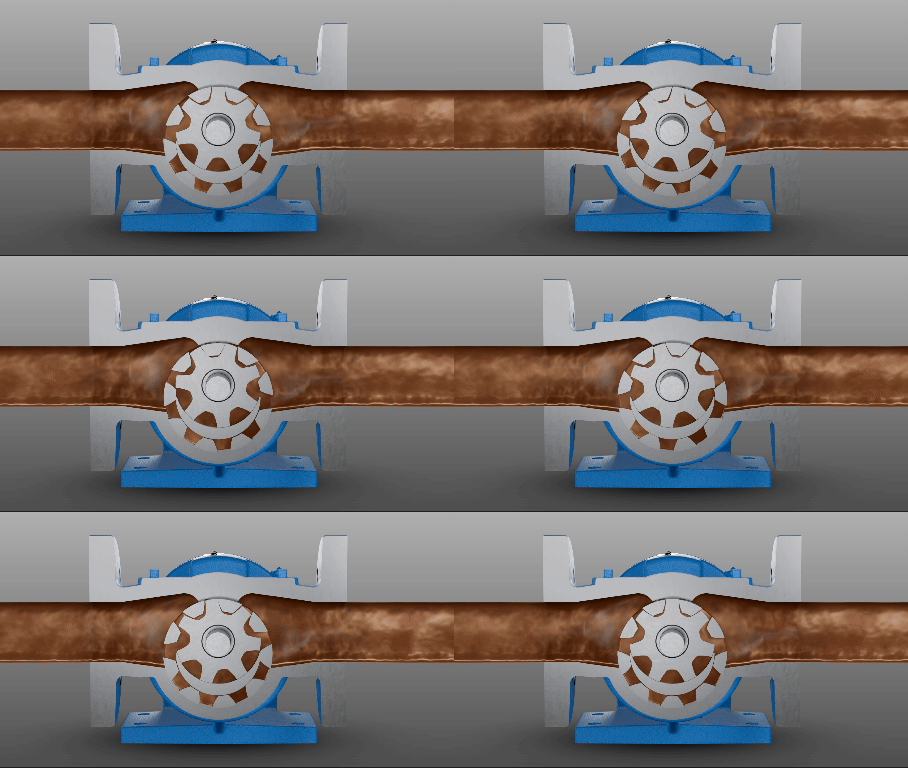
Come funzionano le pompe a ingranaggi interni?
La pompa a ingranaggi interni è una pompa rotativa a pompaggio volumetrico che sposta il fluido sfruttando il movimento rotatorio degli elementi di pompaggio. Il liquido entra nella bocca di aspirazione tra i denti dell’ingranaggio rotore – l’ingranaggio esterno più grande – e dell’ingranaggio secondario – l’ingranaggio interno più piccolo. Gli ingranaggi del rotore e dell’ingranaggio secondario, che si ingranano tra loro, formano cavità chiuse in cui viene contenuto il liquido, garantendo così il controllo del volume.
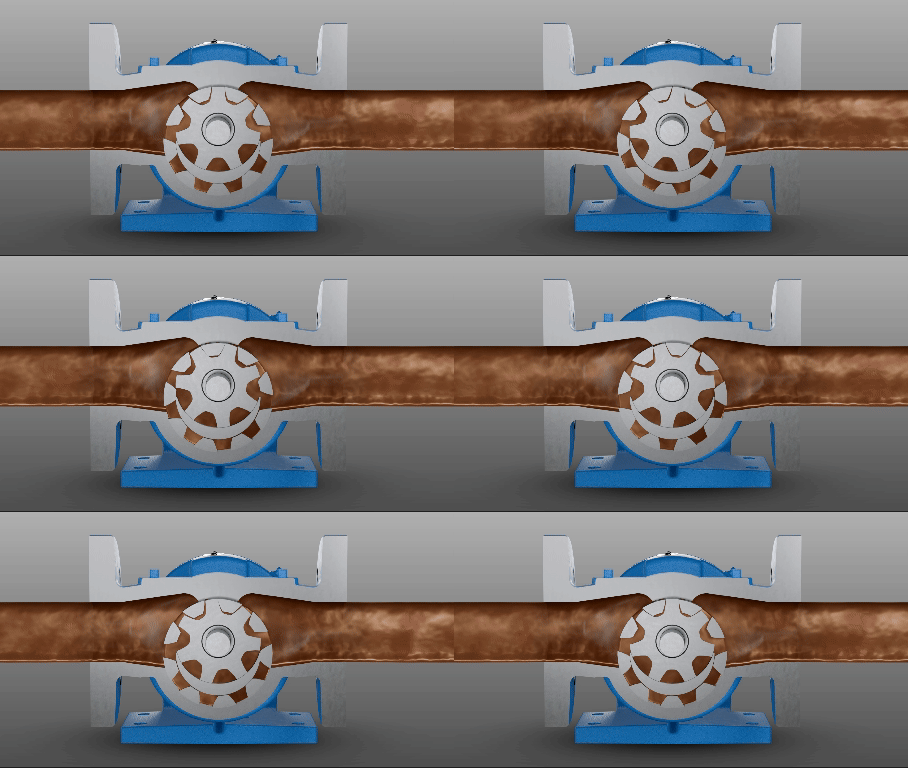
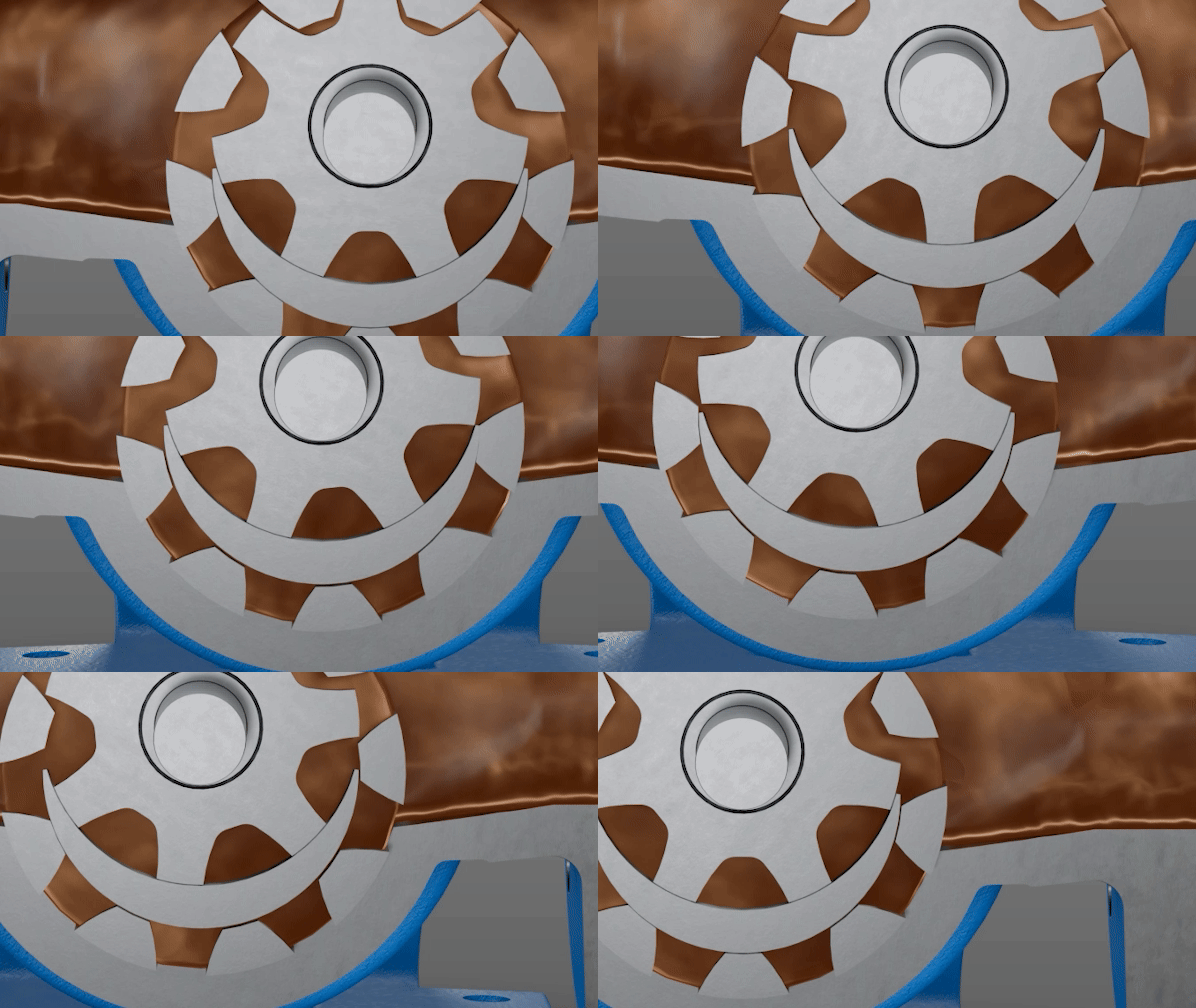
Quando i denti escono dall’ingranamento, si creano zone di bassa pressione nella porta di aspirazione, che attirano il liquido negli spazi. Il liquido continua a scorrere attraverso la pompa, tra i denti, secondo il principio dell’ingranaggio “dentro l’ingranaggio”. Il ritorno del liquido verso il lato di aspirazione è impedito dalla mezzaluna situata sulla testa della pompa, che funge da tenuta tra le porte di aspirazione e di mandata.
Quando i denti si innestano completamente, il liquido viene espulso dagli spazi e fuoriesce dalla bocca di mandata. Il rotore è azionato dall’ingranaggio motore.
Man mano che gli ingranaggi escono dall’ingranaggio, creano un volume in espansione sul lato di aspirazione della pompa. Ciò genera un vuoto che aspira il liquido nella pompa. Il liquido rimane intrappolato tra le cavità dei denti degli ingranaggi e la parete del corpo, che aderisce perfettamente. La rotazione degli ingranaggi trasporta il liquido verso il lato di mandata della pompa. Il liquido non passa tra gli ingranaggi. All’uscita, l’ingranaggio degli ingranaggi spinge il liquido attraverso l’orifizio di mandata.
A cosa servono le pompe a ingranaggi interni?
Le pompe a ingranaggi interni vengono utilizzate in un’ampia varietà di applicazioni poiché sono adatte a un’ampia gamma di viscosità e sono disponibili in diverse dimensioni e configurazioni. Tra le applicazioni più comuni figurano l’asfalto, gli adesivi e il cioccolato.




May 09, 2025
February 16, 2024