 United Kingdom
 France
 Italy
Italy
 Germany
 Sweden
 Spain
Spain
 Canada
 India
India

Ethanol (Cold Ethanol Extraction)
Ethanol (Cold Ethanol Extraction)
Custom Content One
Cold ethanol extraction is a common method for extracting oils from plant materials. Due to its polarity, ethanol is chilled to subzero temperatures to avoid extracting additional, less desirable water-soluble molecules.
In this application biomass is placed in vessel and cold ethanol solvent is pumped in. The desired oils are rapidly dissolved in this solvent. Unlike hydrocarbon solvents, ethanol has no risk of leaving toxic residual chemicals in the product, which is especially important if for human consumption.
Pumps in this application may be used for circulating or transporting ethanol and the extract solution, often with some plant materials included, at temperatures as low as -94ᵒF (-70ᵒC). Pure ethanol viscosity is >4 cPs at these low temperatures, extract solution is even greater.
Positive displacement pumps are optimal for this application due to the ability to handle small, soft solids; the ability to develop higher pressures as filtration becomes blinded; the need for self-priming, the adjustable flow rate with variable speed drive, and the ability to handle varying viscosity.
Custom Content One
Viking in the Process
Viking developed a special series of pumps for this application to be able to handle the extremely low temperatures and other requirements. The pumps circulate ethanol through the chiller and pump it to the extraction vessel, and then draw out the extract liquid and pump it through filtration to an evaporator where pure ethanol is recaptured for reuse, while the product oils are concentrated and removed.
Custom Content Two
Applications
- Pure ethanol circulation and transfer
- Saturated ethanol filtration
Recommended Pumps
-
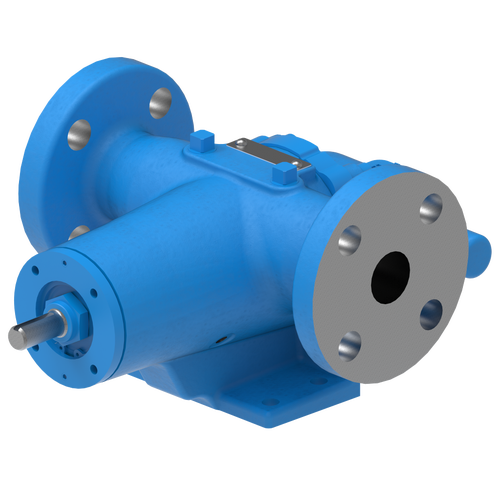
4197-SEP SERIES™
- Stainless Steel
- Mechanical Seal
- up to 75 gpm | up to 17 m3h
Articles / Case Studies

Viscosity is a measure of a liquid’s resistance to flow. And you don’t need to work in a laboratory to observe this. Anyone who’s spent any time in the kitchen has observed a variety of liquids with a wide variety of viscosities.

Unlike most of my colleagues I didn’t start out with a mechanical background. While they were studying kinetics and machine design, I was studying digital electronics and industrial power. When I started my career in the world of pumps, I had to learn a whole new set of concepts. What was surprising was that while the terminology may be a bit different, the concepts are very similar. Think of the following as a “Rosetta Stone” for translating the common terms and concepts of fluid systems to your more familiar terms and concepts of electrical systems.
Videos
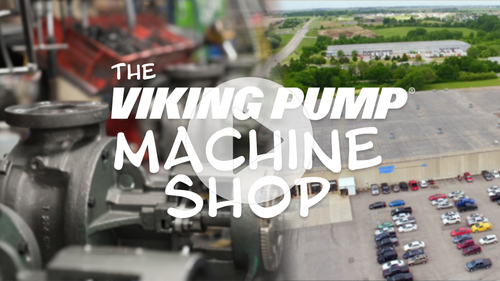
- Welcome to Viking Pump's Machine ShopThis is Viking Pump’s machine shop in Cedar Falls, Iowa. Continual investments in machines and people simplify and expedite production – enabling shipment for thousands of products every year.February 28, 2025
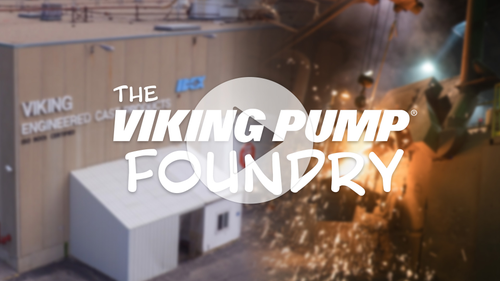
- Welcome to Viking Pump's FoundryThis is Viking Pump’s foundry in Cedar Falls, Iowa. For decades, the Viking Pump foundry has been a pillar of our vertical integration capabilities – allowing for the nimble production of castings and parts to satisfy customer needs and support new product development.February 14, 2025