 United Kingdom
 France
 Italy
Italy
 Germany
 Sweden
 Spain
Spain
 Canada
 India
India


How Standard Pump Testing Ensures Quality Excellence at Viking Pump
How Standard Pump Testing Ensures Quality Excellence at Viking Pump
- Nearly every pump is tested before it ships — performance and leak testing across 27 stands and 11 test fluids, with regular calibration to keep results credible.
- Newer stands capture and store data — enabling pass/fail clarity, easier operation, and the ability to retest field-returned pumps against their original results.
- Failures drive improvement — issues found on the stand or in the field trigger root-cause analysis and corrective action, and trend data helps catch problems before pumps fail.
Nearly every positive displacement pump that leaves our Cedar Falls facility is tested before it ships. This testing ensures pumps will perform in the field and that customers are getting the quality they expect.
To do this, Viking Pump utilizes dozens of test stands, a wide range of test liquids, and processes designed to catch problems long before they get to shipping.
Types of Testing
The majority of testing involves performance testing and some form of leak test.
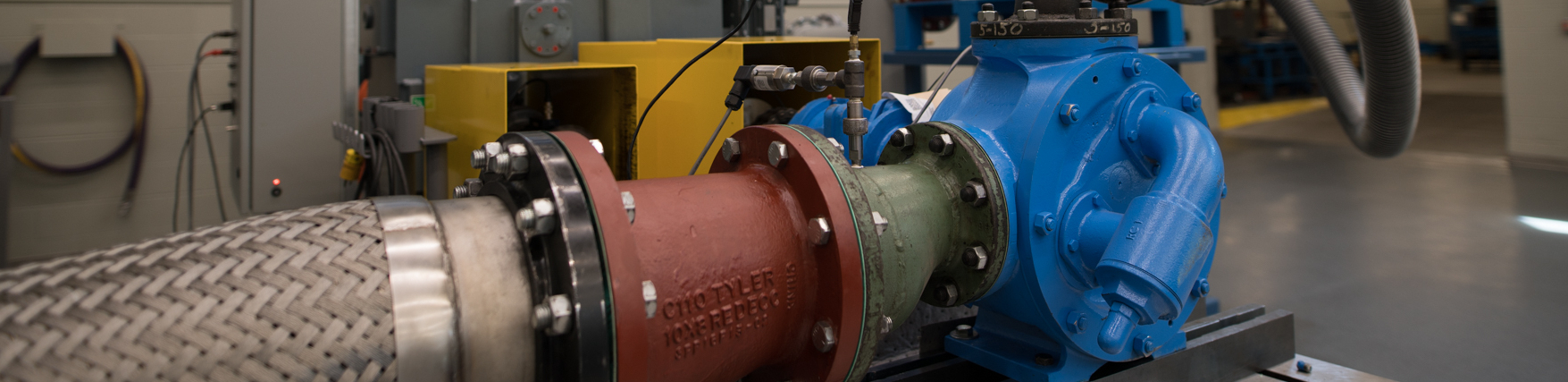
For a performance test, operators flood the pump with fluid and run it, usually around 1,750 RPM. The pump is then monitored to ensure it hits the appropriate outlet pressure and achieves flow.
Valves on the stand let operators increase the outlet pressure. This helps reveal internal problems. If a pump has too much clearance, it won’t make the required flow.
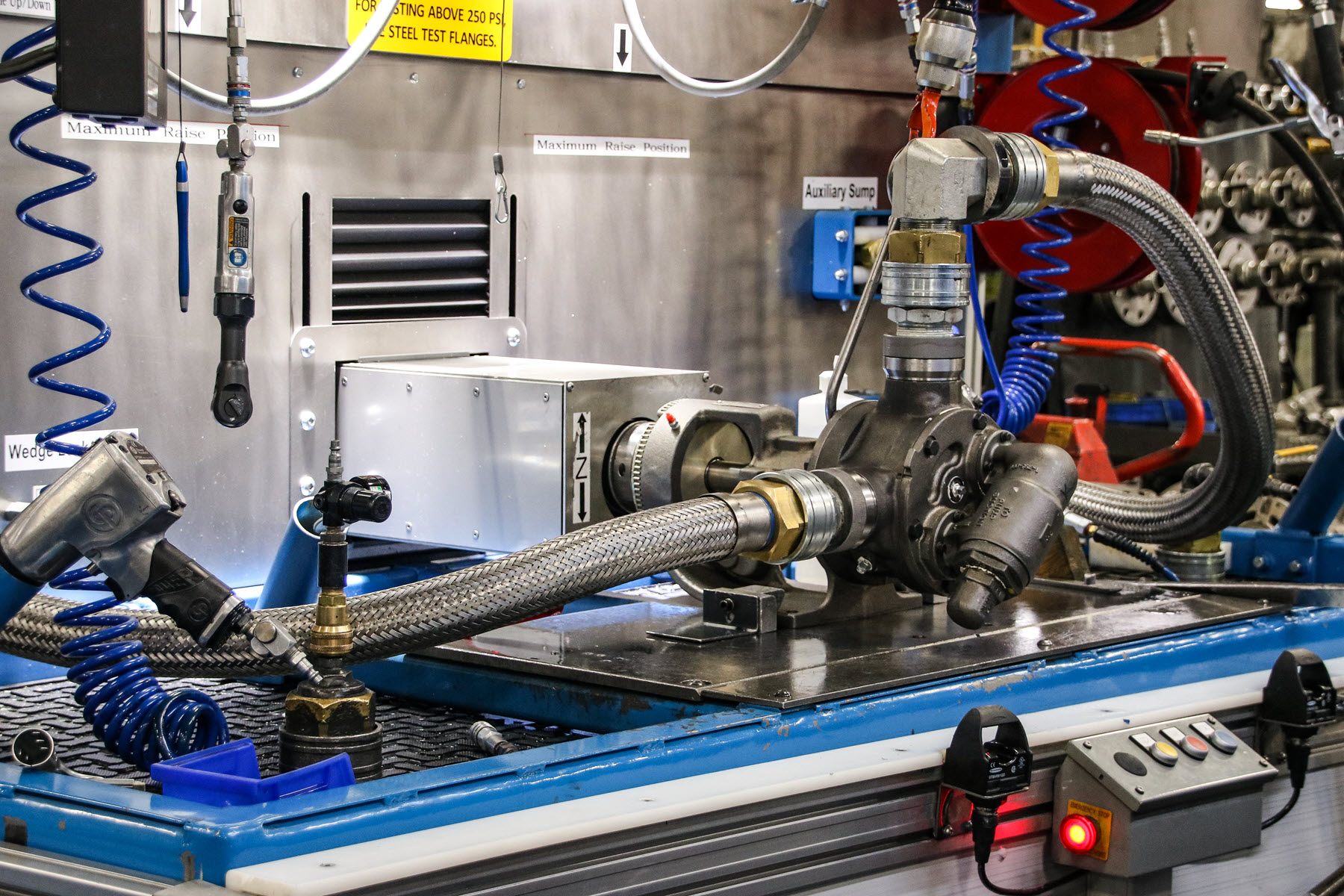
The leak test confirms the pump is sealed. We do it one of two ways: a hydrostatic (fluid) test or a pneumatic (air) test. Both force pressure into the pump and operators watch for leaks or pressure loss over a specified length of time.
Longer endurance runs and customer-specific certified testing takes place in our product engineering lab.
Testing Capacity
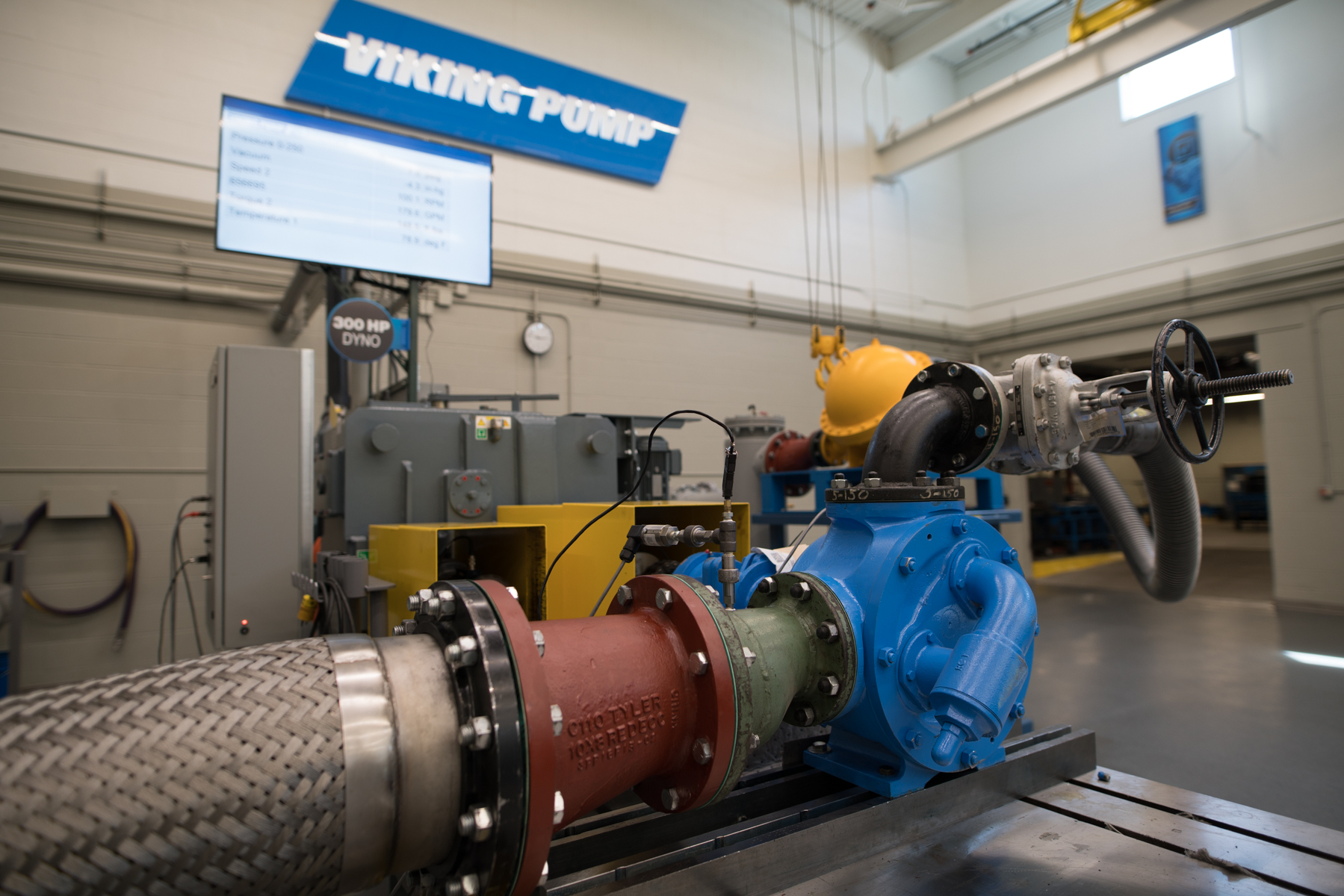
Across the shop we run 27 test stands and 11 different test fluids. Some of that capacity is set aside for specific products or markets. For example, because of the volume tied to certain equipment manufacturers, we dedicate test stands to a single OEM product. This enables high-volume stands to operate without creating a bottleneck.
To keep these test stands accurate, our quality department calibrates them on a regular schedule using a dedicated setup built specifically to test the stands. This important process keeps every result credible.
The Latest Technology
Our newest test stands have state-of-the-art data tracking. These include our LACT (Lease Automatic Custody Transfer) test stand where external gear pumps for the oil and gas market are tested and the A-LS stand for our most common sizes of internal gear pumps. These stands record everything that runs across them: performance data, leak results, and the power required to run the pump.
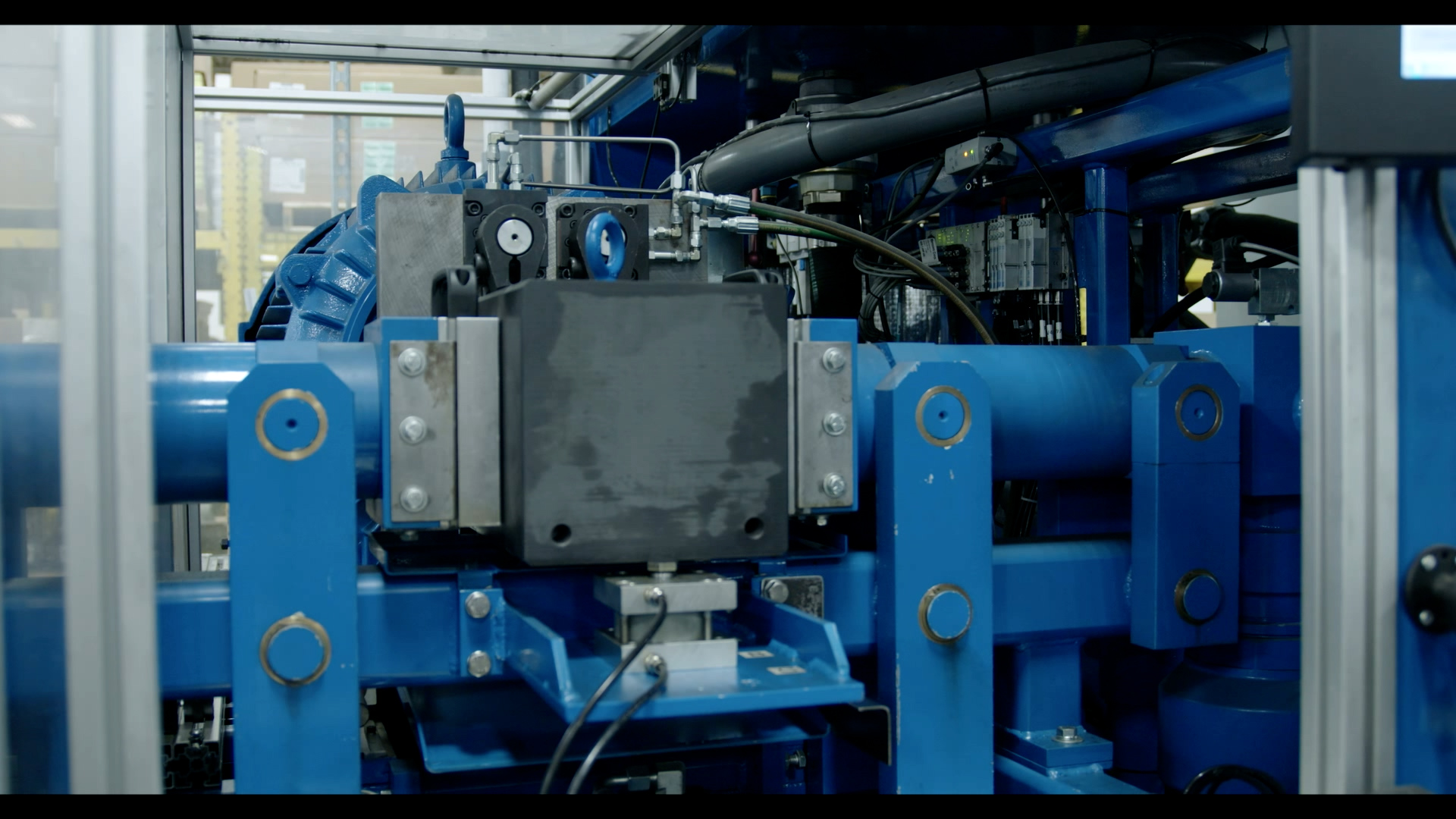
Because results are saved, a pump that is pulled back from the field can be retested. Those results can then be compared to its original test showing how much the pump has worn while in service.
These newer stands are easier on operators, too. Adjustable bench heights and automatic valves handle the pressure changes operators used to run by hand. Testing parameters are also programmed in and deliver a clear pass/fail right on the screen.
When a Pump Fails
If a pump misses on flow or pressure, the operator flags it and moves it to a bench to be torn down and diagnosed. From there it becomes a root-cause question: is it a supplier issue, or something in the assembly? The answer drives a corrective action — a nonconforming material report, a process change, or whatever is needed to ensure the issue is addressed going forward.
Understanding why a pump failed is crucial. As manufacturing engineer Justin Wehling puts it, a failure is “always a learning opportunity to try to make something better.”
A Problem in the Field
Not every issue will show up on a test stand. When a customer flags something after delivery, it enters an internal corrective-action database with the order number, model, quantity, and a description of the issue. The quality team routes it to the right supervisor or manager to run down the root cause. “If we’re not aware of an issue, we may not know to correct it,” says Viking Pump’s value stream manager, Michael Krambeer.
Looking Ahead
Data collection on our newer stands does more than pass or fail one pump at a time; it uncovers trends across dozens of pumps over weeks or months. If performance starts drifting the wrong way, we can dig into the issue before a single pump fails.
New stands with next gen capabilities are being planned for external gear. These stands will log every parameter by serial number, the test fluid temperature, viscosity, and even particulate monitoring in the tank. The manual internal gear stands in service today are candidates for the same upgrades down the road.
Wherever we can, we build the test to mirror the conditions a pump will actually face. As manufacturing engineer Jake Jaynes sums it up, the aim is to run a pump under the same parameters it’ll see in the field, “so that if we know it performs here, we know it’ll perform for them (the customer) when it’s in service.”